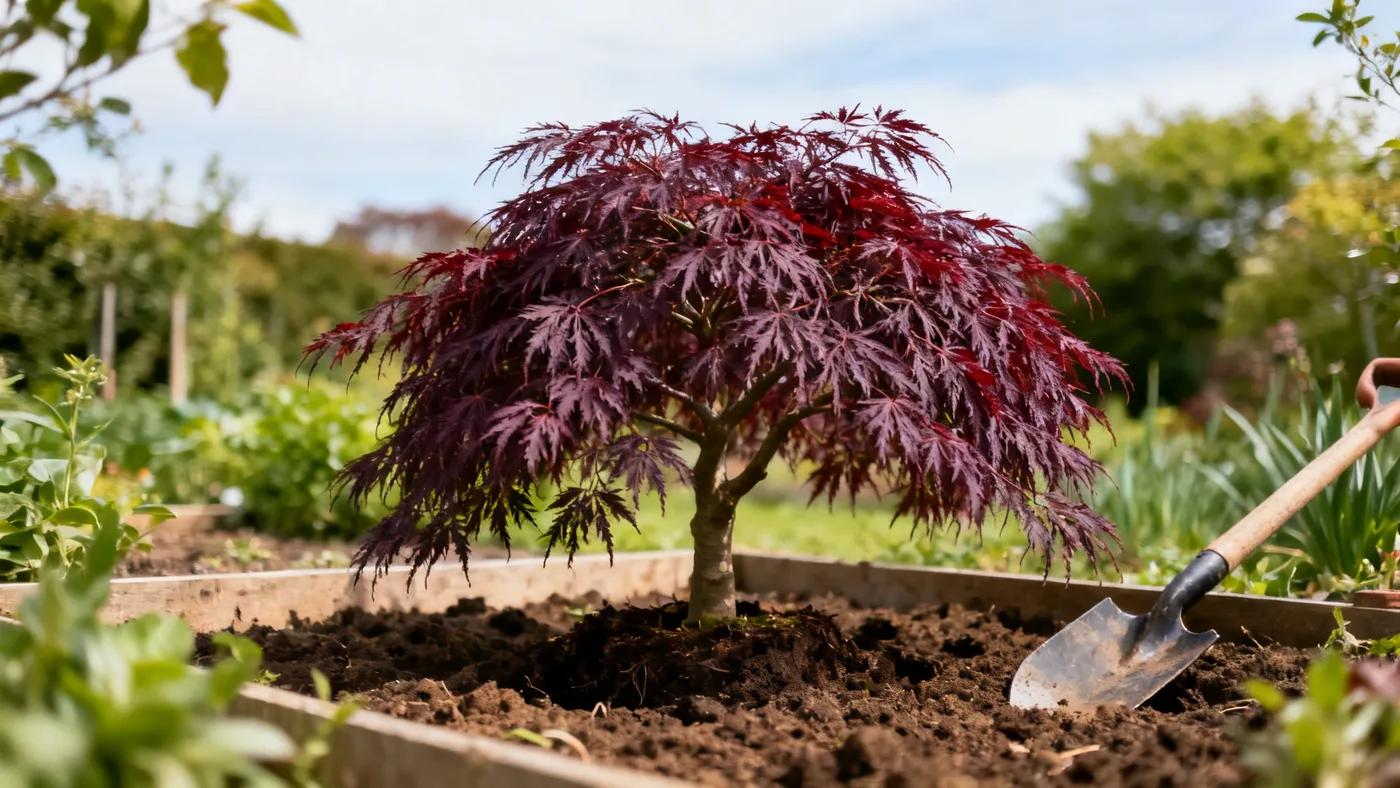
Tamukeyama Japanese Maple vs Crimson Queen: What to Plant?
Both Tamukeyama and Crimson Queen are time-honored weeping Japanese maple cultivars, and choosing between them is a practical decision many gardeners face when planning a focal point or specimen planting. On the surface, they look nearly identical. Both are dissectum forms with finely laced foliage and a graceful cascading habit. Both grow slowly and need similar care. Yet subtle but important differences exist, and understanding them can mean the difference between a tree that thrills you year-round and one that disappoints you by midsummer.
This guide cuts through the nursery chatter and compares what you actually need to know before planting.
Comparison at a Glance
| Attribute | Tamukeyama | Crimson Queen |
|---|---|---|
| Botanical Name | Acer palmatum var. dissectum 'Tamukeyama' | Acer palmatum var. dissectum 'Crimson Queen' |
| USDA Hardiness | Zones 5-8 | Zones 5-8 |
| Mature Height | 6-10 feet | Similar; verify with nursery |
| Mature Width | 8-12 feet (wider than tall) | Similar weeping form |
| Growth Rate | Slow, roughly 6-12 inches per year | Slow, comparable |
| Summer Foliage Color | Deep red-purple, holds well | Can lighten or green in heat |
| Fall Color | Crimson to scarlet red | Red, similar |
| Sunlight Needs | Full sun to partial shade | Full sun to partial shade |
| Water Requirements | Moderate, consistent moisture | Moderate, consistent moisture |
| Soil pH | 5.5-6.5 (slightly acidic to neutral) | Similar range |
What Makes Tamukeyama Special
Tamukeyama is one of the oldest and most respected dissectum cultivars on record. It traces back to 1700s Japan, making it a time-tested choice with centuries of growing history behind it. The name itself is a place reference in Japanese horticultural tradition, and the cultivar's longevity speaks to its reliability.
The defining characteristic of Tamukeyama is its remarkable foliage color retention. Where many red Japanese maple cultivars fade to green, bronze, or a muddy brown-red under summer heat and sun stress, Tamukeyama holds a deep, jewel-like red-purple tone from spring through the first frost. This is not luck or accident. Centuries of selection have shaped this cultivar to keep its color even when temperatures climb or the site lacks afternoon shade.
The foliage itself is finely dissected, meaning each leaf is deeply divided into narrow, almost thread-like segments. This creates an airy, delicate appearance that looks nothing like the chunky leaves of species-form maples. Combined with the natural weeping branch habit, this fine texture creates exceptional winter interest even after the leaves drop.
Crimson Queen: The Other Weeping Option
Crimson Queen is another popular dissectum cultivar, widely available in nurseries and garden centers. It shares the weeping habit, fine foliage, and general cold hardiness of Tamukeyama. Both are hardy to zones 5-8. Both grow slowly, taking roughly 10-15+ years to approach mature size. Both need consistent moisture in well-drained soil and benefit from afternoon shade in hot climates.
Where Crimson Queen differs is in how it behaves under summer heat and strong sun. Rather than holding its deep red color, Crimson Queen tends to lighten as temperatures rise, taking on greenish, bronze, or brownish tones by midsummer. This is not a defect or weakness. It is simply how this particular cultivar responds to environmental stress. Some gardeners actually prefer this seasonal color shift, seeing it as adding visual variety through the year.
The Foliage Color Question
This is the practical heart of the comparison. If you visit a nursery and ask a staff member what differs between these two maples, the answer you get may be vague or incorrect. You might hear "Crimson Queen is more compact" or "different shades of red." Neither is precise enough to guide a real planting decision.
The measurable difference comes down to how the cultivar holds color when stressed. Tamukeyama, planted in full sun with afternoon shade in hot zones, maintains burgundy foliage from June through September. The color is consistent and recognizable all season. Crimson Queen, under the same conditions, will likely lighten to greenish-bronze by July, losing the deep red visual punch that makes Japanese maples so appealing as focal points.
This matters most if you are:
- Planting a specimen tree that will anchor a garden design
- Siting the tree in full sun without afternoon shade
- Growing in zones 7 or 8, where summer heat is intense
- Pairing the maple with other plants that would clash with a lightened foliage color
It matters less if your site receives afternoon shade, if you enjoy seasonal foliage shifts, or if the tree will be viewed as part of a mixed planting where color consistency is less critical.
Growing Requirements: Nearly Identical
Both cultivars need the same fundamentals. A rich, well-drained loam is ideal, with a soil pH in the slightly acidic to neutral range of 5.5-6.5. Both tolerate some clay if drainage is adequate; waterlogged soil will kill either one. Both need moderate, consistent moisture throughout the growing season. Container specimens need more frequent watering than in-ground trees.
For spacing, if you are using Japanese maples in a grouping or grove planting, allow 8-10 feet between specimens. As a specimen focal point or patio container, either cultivar works well. The complete care guide for Tamukeyama covers watering, feeding, and seasonal care in detail; the same practices apply to Crimson Queen.
Both cultivars benefit from afternoon shade in hot-summer climates. This is especially important in zone 8 and warmer. Full sun is fine in zones 5-6, but in zone 7 and hotter areas, filtering strong afternoon sun will keep foliage color more stable and reduce stress on the tree.
Pruning and Shape
Both dissectum maples need minimal pruning. Prune in late fall through winter dormancy only to remove dead wood, crossing branches, or growth that points downward into the weeping form. Avoid heavy pruning or aggressive shaping. Both are slow growers that resent hard cuts, and over-pruning stresses the tree and can invite disease.
The natural weeping habit is the main visual asset of either cultivar. Let it express itself rather than fighting it with shears. Tamukeyama reaches 6-10 feet tall and 8-12 feet wide at maturity, with the width typically exceeding the height because of the cascading form. Crimson Queen reaches similar dimensions. Plan your spacing accordingly.
Pests, Diseases, and Stress
Both cultivars face the same potential pests and diseases. Scale insects, aphids, borers, spider mites, and Japanese beetles can attack either one. Both can develop verticillium wilt, anthracnose, or root rot in poorly drained soil. Environmental stress like leaf scorch from drought, wind, or hot sun can affect either cultivar.
Tamukeyama's better color retention under heat actually means it shows fewer stress symptoms. Crimson Queen's lightening foliage may in fact be a visual indicator that the tree is experiencing stress. Neither cultivar has an inherent advantage in pest or disease resistance.
Which One Is Right for You?
Choose Tamukeyama if:
- You want a focal point with stable, deep red foliage all season long
- Your site gets full sun without afternoon shade (zones 5-7)
- You value historical pedigree and proven performance over many decades
- You are planting in a container on a sunny patio
- You want the tree to anchor a design with consistent, predictable color
Choose Crimson Queen if:
- You enjoy seasonal foliage color changes through the year
- Your site offers afternoon shade where the cultivar will perform beautifully
- The tree is part of a mixed planting rather than a standalone specimen
- Availability matters and you want the cultivar that is easiest to find at local nurseries
- You prefer a cultivar that lightens under heat, signaling the need for afternoon shade
The Bottom Line
Both are excellent weeping Japanese maples. The difference is real but narrow. Tamukeyama's advantage is its proven ability to hold deep red-purple color all season, especially in full sun and heat. This makes it the more reliable choice for a high-visibility focal point. Crimson Queen is a solid, widely available alternative that performs equally well in shaded sites and offers seasonal color variation if that appeals to you.
Both cultivars live 50-100+ years or more with proper care. Both bring the graceful weeping form that makes dissectum maples so prized. The difference comes down to whether you want color consistency or seasonal change, and whether your site offers the shade that helps either one thrive.
Quick Reference: Decision Checklist
| Question | Answer |
|---|---|
| Is your site full sun without afternoon shade? | Tamukeyama is the safer choice for color stability |
| Does your site have afternoon shade? | Either cultivar will perform well |
| Do you want color consistency all season? | Tamukeyama |
| Do you enjoy seasonal foliage color shifts? | Crimson Queen may appeal to you |
| Are you in zones 5-7? | Both perform well; Tamukeyama excels in full sun |
| Are you in zone 8 or warmer? | Afternoon shade is necessary for either; Tamukeyama holds color better |
| Is availability a primary concern? | Crimson Queen is more commonly stocked |
| Is this a specimen or focal point? | Tamukeyama's color retention makes it the stronger choice |
| Are you planting in a container? | Either works well; preference is yours |