Tamukeyama Japanese Maple Care: The Complete Growing Guide
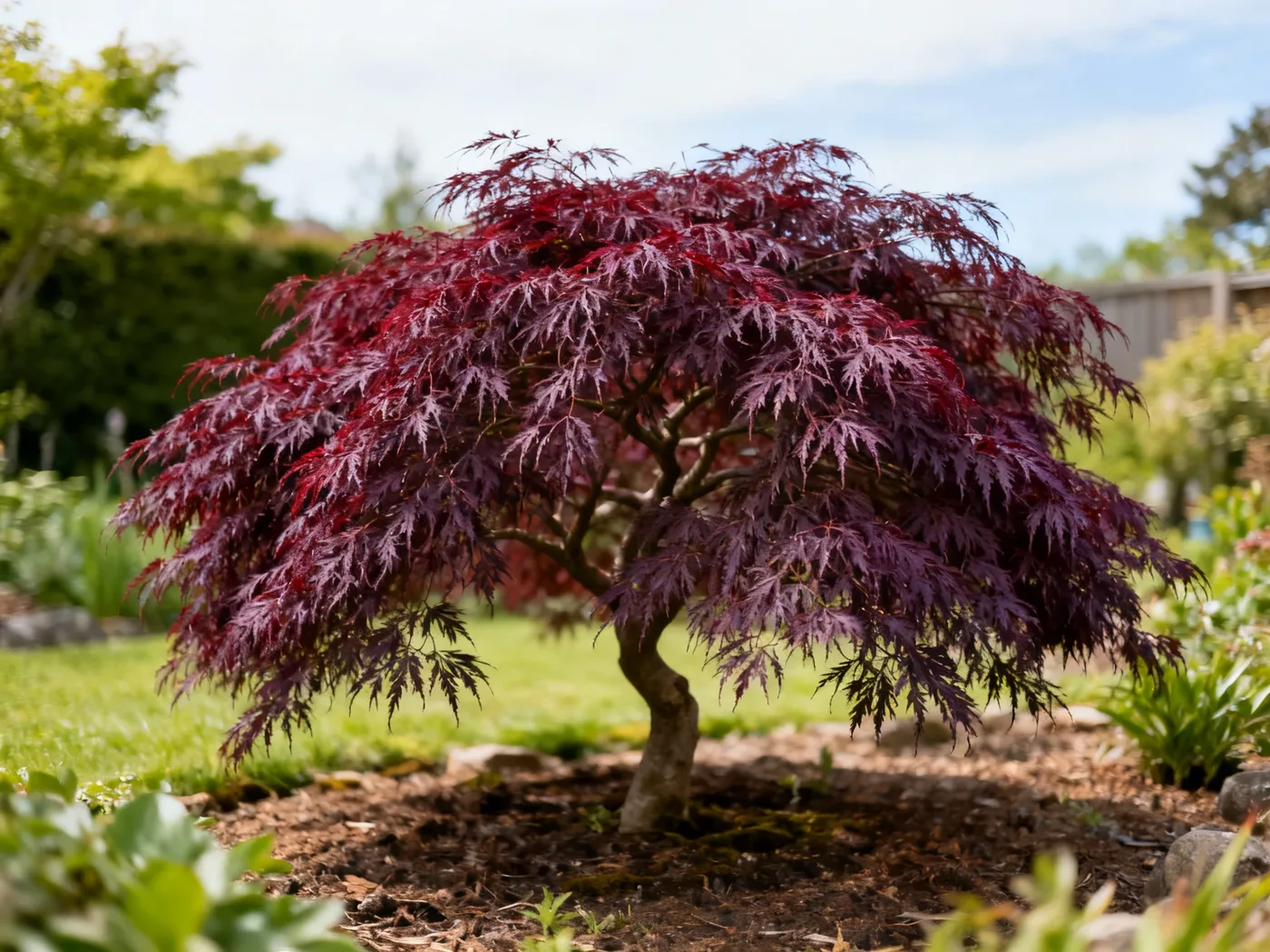
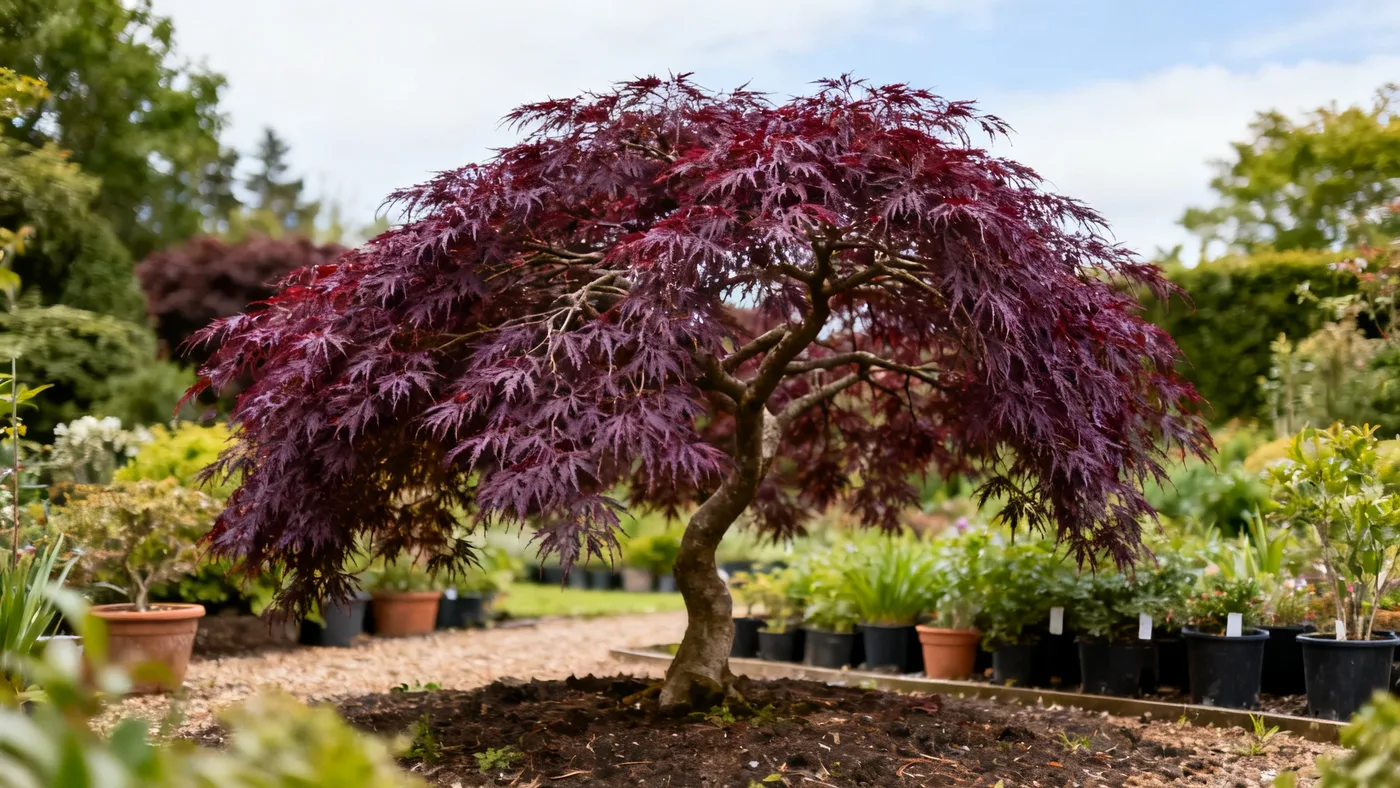
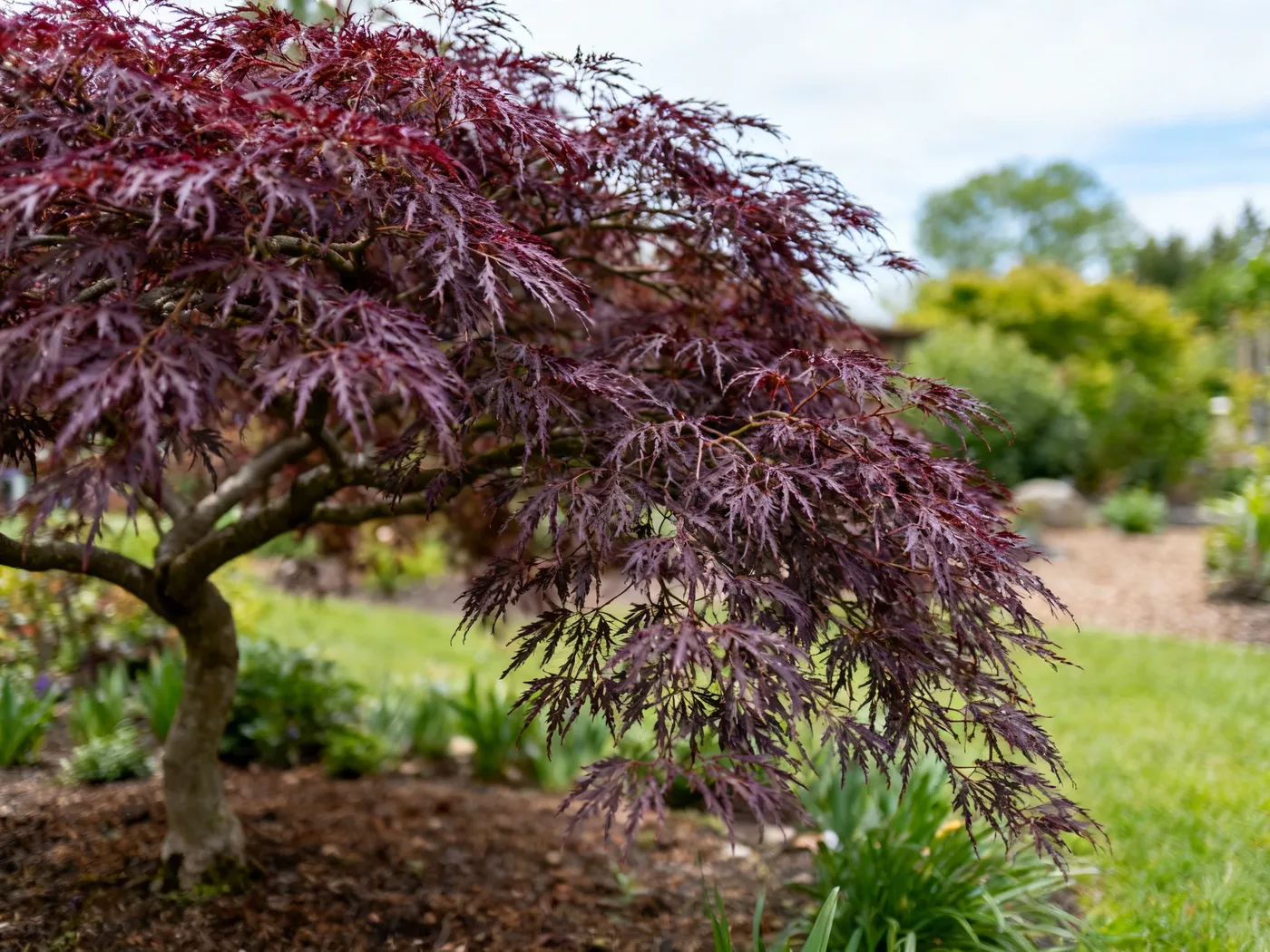
The Tamukeyama Japanese Maple (Acer palmatum var. dissectum 'Tamukeyama') is among the most striking ornamental trees you can grow. Its finely dissected, lacy leaves stay deep red-purple through the summer months, then shift to crimson or scarlet red in fall. The cascading, weeping form creates a fountain-like silhouette that draws the eye in any landscape. This guide covers everything you need to grow and maintain a healthy Tamukeyama maple for decades.
Table of Contents
- When to Plant and Where
- Sunlight and Location
- Soil, Water, and Drainage
- Feeding and Seasonal Care
- Pruning and Shaping
- Common Pests and Problems
- Growing in Containers
- Quick Reference Guide
Key Takeaways
- Hardiness: USDA zones 5 through 8; zone 9 requires afternoon shade and consistent moisture
- Size: Expect 6-10 feet tall and 8-12 feet wide after 10-15+ years of growth
- Growth rate: Slow, typically 6-12 inches per year
- Sun needs: Full sun to partial shade, but afternoon shade prevents leaf scorch in hot climates
- Water: Consistent, moderate moisture in well-drained soil; more frequent for container-grown plants
- Soil pH: Slightly acidic to neutral, ideally 5.5 to 6.5
- Minimal pruning required; prune in late fall or winter dormancy only
When to Plant and Where
Planting Season
The best time to plant Tamukeyama Japanese Maple is early spring or fall, avoiding extreme summer heat or winter freeze at planting time. Spring planting gives the tree months to establish roots before hot weather. Fall planting works equally well in zones 5-7, but in zone 8 or warmer, spring is safer because young trees planted in fall may not survive a severe winter freeze.
Site Selection Basics
Choose a location where the tree will have room to reach its mature size: 6-10 feet tall and typically 8-12 feet wide (wider than tall due to its cascading habit). Space the tree 8-10 feet from other specimens or structures. Avoid planting near sidewalks or driveways where foot traffic will disturb shallow roots.
The weeping form looks best as a specimen focal point in a lawn, on a patio, or near a water feature. Tamukeyama also thrives in Japanese gardens, rock gardens, and as an accent for entryways. Pair it with shade lovers like hostas, ferns, azaleas, or dwarf conifers to create a balanced landscape.
Sunlight and Location
Sun Requirements
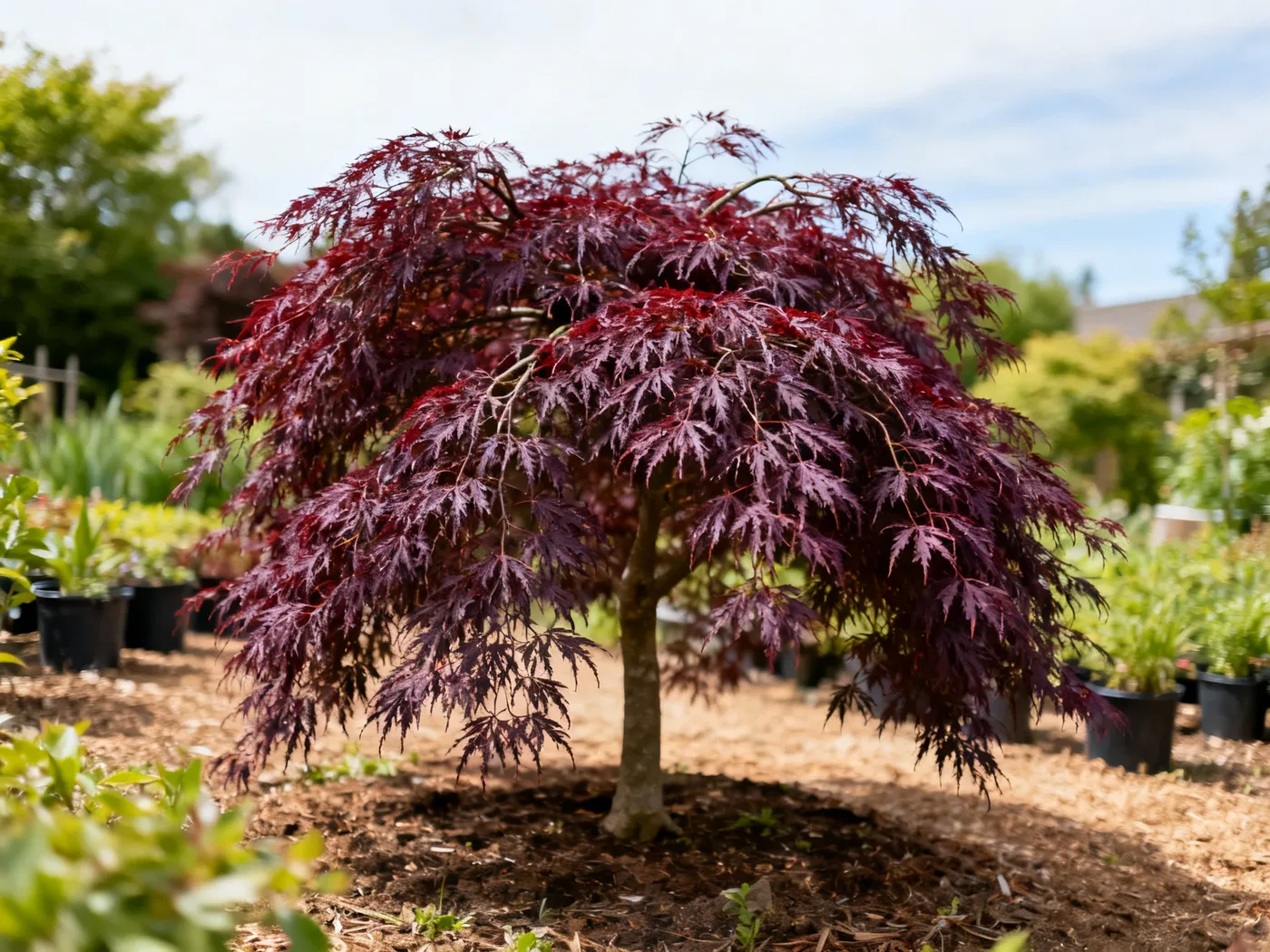
Tamukeyama Japanese Maple tolerates full sun to partial shade. In cooler regions (zones 5-7), it performs well in full sun. However, afternoon shade becomes crucial in hot-summer climates to prevent leaf scorch, a condition where leaf edges turn brown or curl under stress.
If you live in zone 8 or 9, provide afternoon shade, especially during peak summer heat (June through August). Morning sun combined with afternoon shade is ideal. A north or east-facing location works well in hot climates, where the tree receives gentle morning light but avoids the intense afternoon rays.
Wind Protection
Wind stress combined with hot sun or drought accelerates leaf scorch. Plant in a sheltered location if possible, or create a windbreak with taller trees or structures nearby. The finely dissected leaves, while beautiful, are more prone to damage from harsh winds than broader-leafed maples.
Soil, Water, and Drainage
Soil Composition
Tamukeyama thrives in rich, well-drained loam with slightly acidic to neutral pH, ideally between 5.5 and 6.5. If you have clay-heavy soil, amend it with aged compost or leaf mold to improve drainage. The tree tolerates some clay as long as water does not pool around the roots.
Before planting, dig a hole twice as wide as the root ball and just as deep. Loosen the surrounding soil to help roots establish quickly. Mix compost into the backfill to boost fertility and water retention without creating a waterlogged pocket.
Watering Schedule
Tamukeyama requires consistent, moderate moisture and cannot tolerate drought stress, especially when young. Water deeply after planting and keep soil evenly moist (not soggy) through the first growing season. Once established after 2-3 years, the tree is more drought-tolerant but still prefers regular watering during dry spells.
In hot or dry weather, water once or twice weekly, delivering 1-2 inches per week depending on rainfall. Mulch the base with 2-3 inches of aged wood chips or leaf mold, keeping mulch 6 inches away from the trunk to prevent rot. Container-grown plants need more frequent watering because soil dries faster; check soil moisture daily and water when the top inch feels dry.
Soil pH and Chlorosis
Alkaline soil (above pH 7) can cause chlorosis, where leaves yellow despite adequate water and nutrients. If foliage shows yellowing with green veins, test your soil pH. Acidify alkaline soil by adding sulfur or an acidifying fertilizer designed for acid-loving plants.
Feeding and Seasonal Care
Fertilizing
Tamukeyama Japanese Maple needs light feeding rather than heavy nutrition. In early spring, apply a balanced, slow-release fertilizer formulated for woody ornamentals or acid-loving plants. Follow product label rates and avoid over-fertilizing, which pushes weak, tender growth susceptible to pests and disease.
A single spring application is usually sufficient for established trees. Container plants may benefit from a light feeding in early summer as well, since frequent watering leaches nutrients. Never fertilize in late summer or fall, as this encourages soft growth that winter cold may damage.
Seasonal Monitoring
Watch for early signs of stress in summer: curled leaves, brown edges, or premature color loss may indicate drought, heat stress, or root problems. Adjust watering or provide more afternoon shade if needed. In fall, admire the brilliant crimson to scarlet red foliage before leaves drop. Winter reveals the graceful branch structure and fine bark texture of the bare tree, adding winter interest to the landscape.
Pruning and Shaping
Minimal Pruning Philosophy
Tamukeyama Japanese Maple requires minimal pruning and is naturally graceful without heavy shaping. The cascading form develops naturally with age. Remove dead, diseased, or crossing branches only, and prune when the tree is dormant in late fall through winter. Heavy pruning stresses the tree and can weaken it significantly.
Pruning Technique
Use clean, sharp pruning shears to make cuts close to the branch collar (the slight swelling at the base where a branch meets the trunk). Never leave stubs. The tree will heal more quickly and resist disease better if cuts are made cleanly. Remove any downward-growing branches that touch the ground excessively or interfere with maintenance.
Avoid pruning in spring when sap is flowing, as the tree will "bleed" and lose resources. Wait until late fall or winter dormancy for all pruning work.
Common Pests and Problems
Insect Pests
Tamukeyama can attract aphids, scale insects, spider mites, Japanese beetles, and wood borers. Most infestations are minor if the tree is healthy. Monitor for yellowing, stippled leaves, sticky residue, or visible insects. Early detection makes control easier.
For minor pest issues, spray with a strong water stream to dislodge aphids or mites, or prune out heavily infested branches. Horticultural oil or neem oil applied in early spring can control scale and overwintering mites. Avoid broad-spectrum insecticides unless infestations are severe, as these kill beneficial insects too.
Fungal and Root Diseases
Verticillium wilt, anthracnose, and Phytophthora root rot are the main diseases Tamukeyama may encounter. Root rot occurs only in poorly drained soil where water pools around the base. Ensure drainage is excellent and never let the tree sit in standing water.
Verticillium wilt causes wilting and yellowing on one side of the canopy; unfortunately, there is no cure. Remove infected trees. Anthracnose shows as brown lesions on leaves and twigs during wet springs. Pruning out affected growth and improving air circulation help. A dormant fungicide spray applied in early spring can prevent anthracnose if the disease occurred the previous year.
Leaf Scorch
Leaf scorch is environmental, not a disease. Brown or curled leaf edges result from a combination of hot sun, wind stress, and drought. Prevention is key: provide afternoon shade in hot climates, water consistently, and shelter the tree from strong winds. Once scorch appears, it cannot be reversed on affected leaves, but new growth will be normal if growing conditions improve.
Growing in Containers
Container Selection and Soil
Tamukeyama is well-suited to container growing and is commonly used for patio and bonsai-style applications. Choose a large pot at least 2 feet deep with multiple drain holes. Use a well-draining potting mix designed for acid-loving plants or Japanese maples, or mix standard potting soil with extra coarse perlite or bark.
Container Care
Container plants dry out much faster than in-ground specimens. Water daily or every other day during the growing season, checking soil moisture frequently. Do not let the soil dry completely, but avoid waterlogging. Feed container plants every 4-6 weeks during spring and early summer with diluted liquid fertilizer.
In zones 5-7, container trees may need winter protection in a sheltered location or unheated garage to prevent root damage from repeated freeze-thaw cycles. Move the pot against the house foundation or wrap it in burlap for extra insulation. In zones 8 and warmer, the tree can stay outdoors year-round.
Quick Reference Guide
| Factor | Specification |
|---|---|
| USDA Hardiness | Zones 5-8; zone 9 requires afternoon shade |
| Mature Size | 6-10 ft tall, 8-12 ft wide |
| Growth Rate | Slow, 6-12 inches per year |
| Sun Exposure | Full sun to partial shade; afternoon shade in hot climates |
| Soil pH | 5.5-6.5 (slightly acidic to neutral) |
| Soil Type | Rich, well-drained loam; tolerates some clay if drained |
| Water Needs | Consistent, moderate moisture; 1-2 inches per week in dry weather |
| Mulch Depth | 2-3 inches, 6 inches away from trunk |
| Pruning Window | Late fall through winter dormancy only |
| Spring Fertilizing | Light, balanced slow-release; follow label rates |
| Spacing from Other Plants | 8-10 feet from other specimens |
| Container Drainage | Essential; multiple drain holes required |
| Lifespan | 50-100+ years with proper care |
Checklist for First-Year Success
- Plant in early spring or fall in a sheltered location with appropriate sun exposure for your zone
- Amend soil with compost and mulch after planting; maintain consistent moisture without waterlogging
- Monitor for leaf scorch and adjust shade or watering if needed during summer
- Apply a balanced slow-release fertilizer in early spring only
- Inspect monthly for pests or disease signs; remove any dead or diseased branches promptly
- Water deeply once or twice weekly in dry weather; increase frequency for container plants
- Do not prune in the first year except to remove dead wood
- Enjoy fall color and winter silhouette as the tree matures