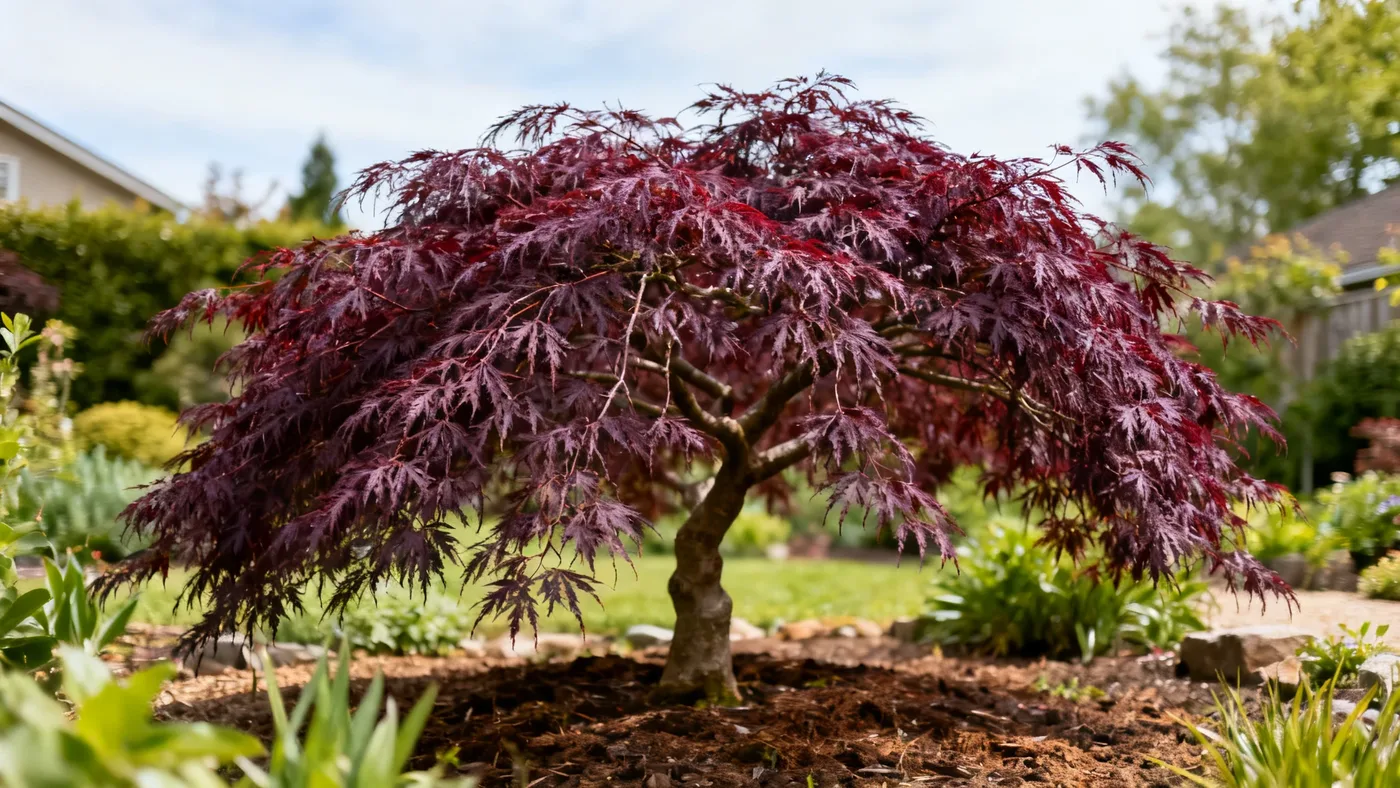
Tamukeyama Japanese Maple Sun and Shade Requirements Explained
Getting the right amount of light is one of the most important decisions you'll make for your Tamukeyama Japanese Maple. This beautiful weeping cultivar wants light, but not too much. The difference between a thriving tree with brilliant deep red-purple foliage and one that struggles with leaf scorch often comes down to how much direct sun it receives, especially in afternoon heat.
Understanding Tamukeyama Japanese Maple Sun Requirements
Tamukeyama Japanese Maple performs best in full sun to partial shade. This is not a rigid rule but a range that changes based on your climate. Full sun means at least 6 hours of direct sunlight daily. Partial shade means 3 to 5 hours, with the rest of the day spent in filtered light or dappled shade.
In cooler climates (zones 5 to 7), your Tamukeyama actually prefers more sun exposure. The light helps develop and maintain its signature deep red-purple leaf color throughout summer. Many growers in these zones successfully plant it in full sun with excellent results.
The key detail is afternoon sun. Morning and midday sun are energizing. Afternoon sun is when the air and soil heat up most intensely, and this is where problems can develop. If you live in a hot-summer climate, afternoon shade becomes not a luxury but a practical necessity for preventing leaf scorch.
When Afternoon Shade Becomes Essential
If you're gardening in zone 8 or warmer, afternoon shade should be part of your Tamukeyama Japanese Maple sun exposure strategy. These are regions where summer temperatures regularly climb into the 90s Fahrenheit or higher. The combination of intense afternoon rays and heat stress can cause the foliage to scorch, turning leaf edges brown and papery even when soil moisture is adequate.
Afternoon shade means positioning your tree so that it gets morning and midday light but receives dappled or filtered shade from about 2 or 3 p.m. onward. The best afternoon shade comes from deciduous trees (they provide shade in summer when you need it most, then drop leaves in winter to let light through). A building or fence on the west side of your planting location also works well, as it blocks the hottest, most direct rays.
Even in zone 8, if you have a spot that gets morning sun but afternoon protection, you can successfully grow a Tamukeyama. Without that shade, the foliage may develop a greenish tint in intense heat rather than holding its red-purple color through the season, and leaf scorch becomes a real risk.
Recognizing and Preventing Tamukeyama Maple Leaf Scorch
Leaf scorch is an environmental injury, not a disease. It happens when leaves lose water faster than roots can replace it. This occurs under intense sun, low humidity, wind stress, or drought. The edges and tips of leaves turn brown and crispy. Once scorch appears, you cannot reverse it on that season's foliage, but you can prevent it from worsening next year.
Prevention starts with site choice and soil preparation. Tamukeyama needs consistent moisture in well-drained soil. Well-drained does not mean dry. It means the soil holds water long enough for roots to absorb it, then drains excess so roots don't rot. Amend heavy clay with compost or aged bark mulch before planting to improve both drainage and water retention.
During the growing season, water deeply and regularly, especially in the first year after planting and whenever temperatures spike. Container specimens need more frequent watering than in-ground plants. Apply 2 to 3 inches of mulch around the base, keeping it a few inches away from the trunk to prevent rot.
Wind increases water loss from leaves. If your planting site is exposed to persistent wind, either choose a more sheltered spot or plant a windbreak nearby.
Assessing Your Planting Site: A Practical Evaluation
Before you dig, spend a day observing your potential planting location. Different times of year and different times of day reveal different light patterns.
Start in the morning. Walk to the spot at sunrise and watch how the light changes from 7 a.m. to noon. Notice where shadows fall from buildings, fences, and existing trees. In summer (when you want the protection most), trees are in full leaf and cast their deepest shade. In winter, they're bare and shed more light.
Come back at midday and again in late afternoon. Late afternoon is critical. At 3 or 4 p.m., observe whether the area is in direct sun or already shaded. This is the hottest time and the most stressful for Tamukeyama in warm climates.
Take note of soil type. Dig a small hole and feel the soil. Is it mostly clay, mostly sand, or a balanced loam? Heavy clay will need amendment. Sandy soil will need added organic matter to hold moisture.
Step-by-Step: Choosing and Preparing Your Tamukeyama Planting Site
- Identify candidate locations. List three to five spots in your yard that receive morning sun. Narrow these down based on your zone and climate: zones 5 to 7 can use mostly full sun; zones 8 and warmer need afternoon shade.
- Track the sun pattern for one day. Visit your top choice at 8 a.m., noon, and 4 p.m. Record whether it's in sun or shade at each time. Take a photo to remember the pattern.
- Check for afternoon shade availability. In hot climates, confirm that the spot receives filtered or dappled shade by 2 to 3 p.m., either from existing vegetation or a structure. If it's in full sun all day, it's risky for zones 8 and warmer.
- Evaluate soil drainage. Dig a hole about 12 inches deep in your chosen spot. Fill it with water and wait 24 hours. If water remains, drainage is poor and you'll need to amend heavily or choose a different site. If it drains within a few hours, drainage is adequate.
- Prepare the planting hole. The hole should be as deep as the root ball of your Tamukeyama and about twice as wide. Mix removed soil with compost or aged bark mulch at a ratio of about 1 part amendment to 2 parts native soil. This improves both drainage and water retention.
- Plant at the right time. Early spring or fall is ideal, avoiding extreme summer heat or winter freeze at planting time. This gives the tree time to establish roots before the most stressful season.
- Apply mulch and water deeply. After planting, apply 2 to 3 inches of mulch in a ring around the tree, staying a few inches back from the trunk. Water deeply and regularly, especially during the first growing season. Tamukeyama's slow growth rate (roughly 6 to 12 inches per year) means it takes time to establish, but consistent care during year one pays off.
- Monitor the first season and beyond. Observe your tree from late spring through summer to see how it responds to the light and heat at your chosen location. If you notice early leaf scorch, plan to add afternoon shade in the future, either by planting a deciduous tree nearby or installing a shade cloth.
Common Mistakes to Avoid
Assuming "full sun" means all-day direct sun. For Tamukeyama in hot climates, this assumption leads to leaf scorch. Full sun can still include afternoon shade.
Planting too late in fall or too early in spring. Avoid planting when frost or extreme heat is imminent. This stresses an already vulnerable young tree.
Neglecting soil moisture the first year. New trees have shallow, developing root systems. They can't yet pull water from deep soil layers. Consistent watering is non-negotiable in the establishment phase.
Overestimating existing shade. A tree that casts partial shade in winter may not provide enough afternoon shade come summer when it's fully leafed out. Observe the same spot in both seasons.
Planting near pavement or walls that reflect heat. Concrete and dark surfaces absorb heat and radiate it back onto nearby plants. If afternoon shade comes only from a south-facing wall, that wall is likely making the microclimate hotter, not cooler.
Expected Results and Ongoing Care
With the right sun exposure for your zone and climate, your Tamukeyama should develop the full, weeping form typical of the cultivar. The foliage will maintain its deep red-purple color through much of summer, though it may lighten slightly in intense heat (this is normal). The tree grows slowly, gaining roughly 6 to 12 inches per year. At this pace, it can take 10 to 15 years to approach mature size.
Fall color should be crimson to scarlet red. Winter reveals the graceful weeping branch silhouette and attractive bark texture. Over decades of proper care, your Tamukeyama can easily live 50 to 100 years or more.
For more detailed care guidance, see the complete Tamukeyama Japanese Maple care guide. If you want to shape your tree, read about pruning techniques that minimize stress.
Quick Reference: Sun and Shade Checklist
| Item to Evaluate | What to Look For | Notes |
|---|---|---|
| Morning sun exposure | 6 a.m. to noon: direct sun | Essential in all zones |
| Midday sun (11 a.m. to 2 p.m.) | Direct sun or dappled | Acceptable in all zones |
| Afternoon sun (2 to 5 p.m.) | Full sun OK in zones 5-7; afternoon shade needed in zones 8+ | Most critical for heat protection |
| Soil type | Loam or improved clay | Amend heavy clay; ensure drainage |
| Drainage test | Drains within 24 hours of soaking | Poor drainage invites root rot |
| Mulch depth | 2 to 3 inches around base | Keep away from trunk; refresh annually |
| Water frequency (year 1) | Regular, consistent moisture | More frequent for container specimens |
| Wind exposure | Sheltered or protected location | Wind increases leaf scorch risk |
| Zone | Hardiness zones 5-8; zone 9 requires afternoon shade | Check your USDA hardiness zone |