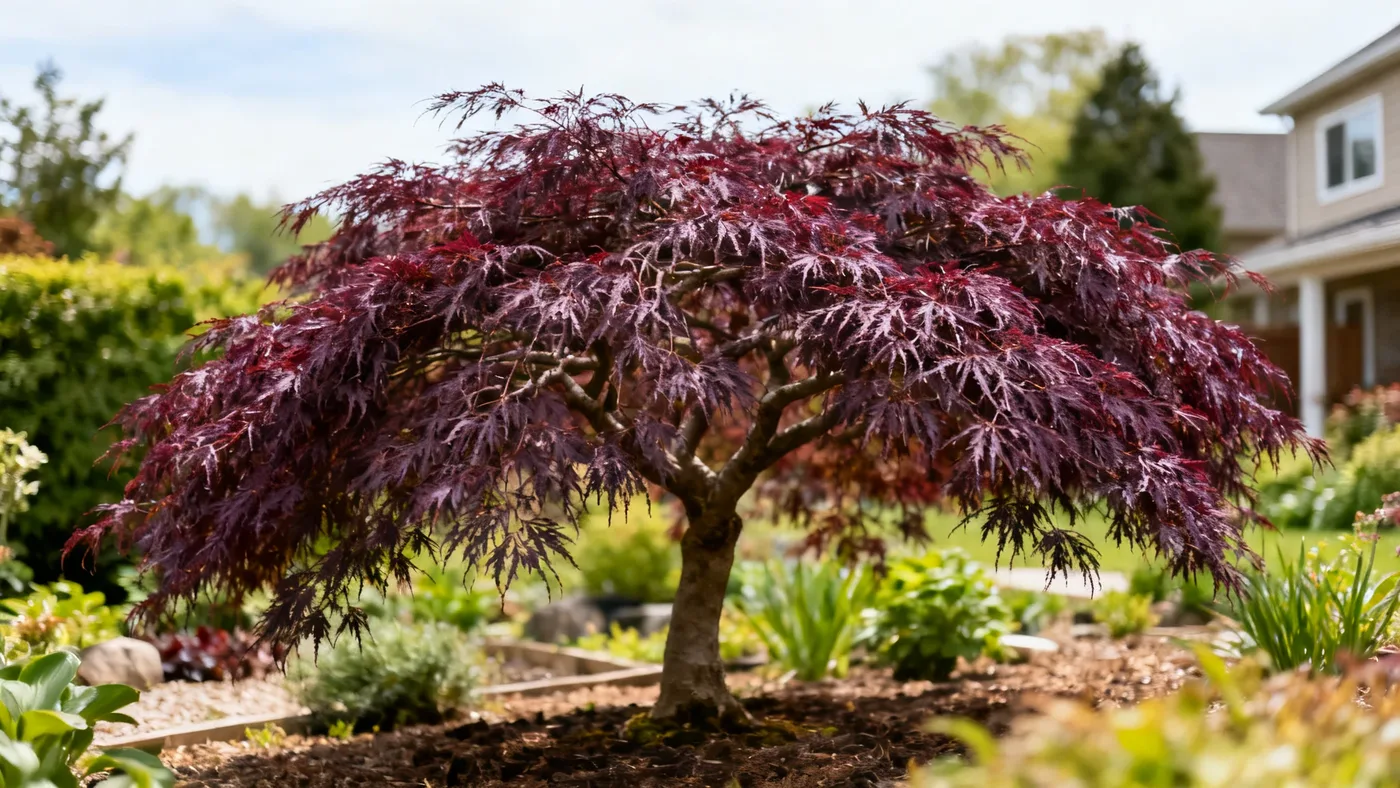
7 Common Tamukeyama Japanese Maple Problems and Fixes
The Tamukeyama Japanese Maple's finely dissected leaves and graceful weeping form make it a standout specimen, but this slow-growing cultivar does have its vulnerabilities. Once you know what to look for, most problems are preventable or treatable. We'll walk you through the issues that come up most often in home gardens, what causes them, and what to do when they appear.
1. Leaf Scorch and Burnt Edges
The Problem
Leaf scorch shows up as brown, papery edges on the foliage, sometimes a faded or bleached appearance across the entire leaf. The damage typically starts in late spring or early summer and worsens in July and August. In severe cases, leaves drop early, exposing bare branches by midsummer.
Leaf scorch on Tamukeyama Japanese Maple problems commonly stems from three combined stresses: hot, direct afternoon sun; low soil moisture; and wind exposure. The lacy leaves are thin and lose water fast. When roots cannot pull moisture from drying soil quickly enough to replace what the leaves lose to heat and wind, the leaf edges burn. This is not a disease. It is a water delivery problem.
The cultivar holds its red-purple color better than many dissectum selections through summer heat, but it still benefits from afternoon shade in hot climates. If you are in zones 8 or 9, afternoon shade becomes essential. Even in zones 5–7, afternoon shade protects trees from summer stress.
The Fix
Water deeply and consistently. Tamukeyama maple pests and diseases aside, this tree's greatest vulnerability is drought stress. Aim for 1 to 2 inches of water per week through the growing season, delivered in one deep watering rather than daily sprinkles. Water at soil level in the early morning, so foliage dries quickly and does not stay wet. In containers, check soil moisture daily during summer; container plants dry faster than in-ground specimens.
Provide afternoon shade. Plant in dappled sun or where it receives direct morning light but shade after 2 p.m. A lath structure, a taller deciduous tree's canopy, or the east-facing side of a wall all work. This single change often stops leaf scorch before it starts. Avoid planting in windy exposure if possible; if your site is breezy, shade becomes even more critical.
Practical takeaway: Water deeply in one morning session per week rather than light daily sprinkles. Plant where it gets afternoon shade, especially in zones 8 and hotter.
2. Yellowing Leaves and Chlorosis
The Problem
Chlorosis appears as yellowing foliage while the veins remain dark green. The leaf still functions but looks sickly. In Tamukeyama maples, chlorosis is almost always caused by alkaline or neutral soil. This cultivar prefers slightly acidic soil in the range of 5.5 to 6.5 pH. When soil pH climbs above 7.0, the roots struggle to absorb iron and other nutrients even if they are present in the soil.
Chlorosis is more common in regions with alkaline water or alkaline soil naturally. If your tap water is hard, you may be raising soil pH every time you water. Container-grown trees are particularly vulnerable because water accumulates salts over time.
The Fix
Check soil pH with an inexpensive kit or have your local extension service test it. If pH is above 6.5, amend the soil. For in-ground trees, work sulfur into the top 2 to 3 inches of soil around the drip line. Sulfur lowers pH gradually. For containers, refresh the potting mix with an acid-loving plant formula, or add peat moss (which lowers pH) to the existing soil. Avoid lime-based amendments.
Reduce hard-water impact by collecting rainwater for watering when possible. If you must use tap water and your water is alkaline, let it sit in a barrel for a day before applying it to the tree. Water the tree deeply at the base, not overhead.
Practical takeaway: Test soil pH. If above 6.5, add sulfur or peat moss to bring it into the 5.5–6.5 range. Use rainwater when possible to avoid raising pH with hard water.
3. Root Rot and Poor Drainage
The Problem
Root rot, typically caused by Phytophthora or other pathogens, thrives in waterlogged soil. The Tamukeyama maple is susceptible when planted in clay, compacted soil, or containers without drainage holes. Symptoms include wilting despite wet soil, dark or mushy roots, and slow decline even after good care in other respects.
This problem develops over weeks or months. Early signs include slowed growth, smaller leaves, and a general lack of vigor. By the time roots are visibly rotted, the tree may be difficult to save. Prevention is far easier than treatment.
The Fix
Ensure soil drains well. If you are planting in clay, amend it with peat moss or bark mulch to improve texture. The soil should feel like a rich, crumbly loam, not dense or sticky. Work amendments into the planting hole and the surrounding area to a depth of 8 to 12 inches and out to the dripline or beyond.
For container plants, always use well-draining potting mix formulated for woody plants or acid-loving plants. Do not reuse old potting soil season after season; refresh it or replace it entirely every other year. Ensure containers have drainage holes at the bottom; drill them if needed.
Water thoroughly but allow the soil to dry slightly between waterings. If the top inch of soil is dry to the touch, water is due. If it is still moist, wait another day or two. In winter, reduce watering dramatically; the tree is dormant and uses little water.
Practical takeaway: Plant in well-draining loam, not clay. Use potting mix formulated for woody ornamentals. Let soil dry slightly between waterings; never leave it soggy.
4. Aphids and Spider Mites
The Problem
Aphids cluster on new growth and leaf undersides, weakening shoots and transmitting viruses. Spider mites are less visible but cause fine stippling on foliage, a subtle yellowing, and a thin webbing on leaf undersides in severe cases. Both pests suck sap from leaves, reducing the tree's vigor. Infestations are more common in hot, dry summers when the tree is already stressed.
You may notice ants tending aphid colonies; the ants farm the aphids for their sweet honeydew secretion. Sticky residue on lower branches or leaves (honeydew) is a sign aphids are overhead.
The Fix
For light infestations, spray the tree with a strong stream of water from the hose. Direct water to the leaf undersides where aphids and mites hide. Repeat every 3 to 5 days for two weeks. This dislodges pests and reduces populations without chemicals.
For heavier infestations, apply insecticidal soap or neem oil, following label directions. Spray in the early morning or evening, not in full sun. Coat both leaf surfaces and the undersides thoroughly. Repeat every 7 to 10 days as needed. Stop applications once the tree leafs out fully in spring or when temperatures consistently exceed 85°F, as some products can burn foliage in heat.
Practical takeaway: Spray with water first. If pests persist after two weeks, use insecticidal soap or neem oil on cool mornings. Repeat every 7–10 days until gone.
5. Sunburned or Cracked Tree Trunk
The Problem
Young or newly planted Tamukeyama maples sometimes develop dark, sunken patches on the south or southwest side of the trunk. These are sunburns. The thin bark of young trees cannot handle intense direct sun and heat. Winter sun reflecting off snow can cause the same damage. The bark cracks, darkens, and may eventually slough off, girdling the branch or trunk and killing it.
This is most common in the first few years after planting, particularly in zones 7 and hotter or in exposed sites. Trees planted in fall or early spring are more vulnerable in their first winter.
The Fix
For newly planted trees, shade the trunk during the first two or three growing seasons. Wrap the trunk loosely with burlap or tree wrap in winter to block winter sun and wind. Remove the wrap in spring once temperatures moderate. Do not wrap it so tightly that you girdle the trunk or trap moisture.
Going forward, maintain afternoon shade, which protects both foliage and bark. Plant in dappled sun or where the tree gets morning light but afternoon shade. Once the tree is 4 to 5 years old and the bark thickens, sunburn risk drops significantly.
If a branch is sunburned and dying, prune it off in late fall or winter during the tree's dormancy. Make a clean cut just outside the branch collar and allow it to heal naturally. Do not use wound dressing or paint.
Practical takeaway: Shade young trunks in their first two or three years. Wrap in burlap in winter if the trunk faces south or west. Remove wrap in spring.
6. Girdling Roots in Container Plants
The Problem
When a Tamukeyama maple sits in a container too long, roots circle the inside of the pot and can eventually wrap around and strangle the trunk. This cuts off water and nutrient flow. The tree will weaken, decline slowly, and may die suddenly when girdling becomes severe. You may notice the trunk looks pinched at the soil line, or roots visible on the soil surface spiral rather than radiate outward.
Girdling roots develop over a year or more. Nursery-grown plants purchased in 1-gallon, #2, or #3 containers are usually not yet root-bound. But if you leave a container-grown tree in the same pot for 3 to 5 years, this becomes likely.
The Fix
Root-bound trees need to be up-potted or planted in the ground. Before planting, gently loosen the root ball by hand. If roots are spiraling tightly, carefully tease them apart with your fingers or a blunt stick. Do not shred the roots; just separate them enough to encourage them to grow outward into the new soil.
Plant the tree at the same depth it was growing in the container. Do not bury the trunk deeper, or you risk rot. If the tree is going to stay in a container, move it to a pot at least 2 inches larger in diameter every 2 to 3 years, using fresh potting mix. A mature Tamukeyama in a container ideally lives in a pot at least 15 to 20 gallons in size.
Practical takeaway: Loosen spiraled roots before planting or up-potting. Up-pot every 2–3 years with fresh soil. In-ground planting is best for long-term health.
7. Scale Insects and Borers
The Problem
Scale insects attach to branches and trunks, looking like small bumps or crusty spots. They suck sap slowly, weakening branches and occasionally causing dieback. Borers, the larvae of beetles and moths, tunnel under the bark and into the wood, leaving small holes and galleries. Borers are most attracted to stressed trees: ones recovering from drought, sunburn, or other injury.
Both pests are less common on healthy, vigorously growing Tamukeyama maples. They are more likely to appear if the tree is already struggling.
The Fix
Keep the tree healthy and vigorous. Water consistently, provide afternoon shade, and prune only dead or crossing branches in late fall or winter dormancy. Avoid heavy pruning, which stresses the tree and attracts borers.
For scale insects, prune off infested branches if only a few are affected. If scale is widespread, apply horticultural oil in late fall or early spring while the tree is dormant. Horticultural oil smothers overwintering scales. Repeat applications every 7 to 10 days for two or three applications. Once the tree leafs out, do not apply oil, as it can burn new foliage.
For borers, the best approach is prevention. Do not wound the tree with pruning or damage during planting. If you see fresh holes and sawdust-like frass (insect droppings) at the base of the trunk, a borer tunnel may be active. If the tree is otherwise healthy, it will often heal the wound and compartmentalize the borer, stopping it without intervention. If the tree is weak and multiple branches are dying, consult a certified arborist.
Practical takeaway: Keep the tree healthy to prevent borers. Prune scale-infested branches. Apply horticultural oil in dormancy if scale is severe. Avoid unnecessary pruning and trunk wounds.
Quick Reference: Problem Diagnosis and Response
| Problem | Symptoms | Primary Cause | First Step |
|---|---|---|---|
| Leaf scorch | Brown, papery leaf edges; premature drop | Sun, wind, drought stress | Water deeply once weekly; add afternoon shade |
| Yellowing (chlorosis) | Pale yellow leaves with green veins | Alkaline soil (pH > 6.5) | Test soil pH; add sulfur or peat moss if needed |
| Root rot | Wilting in wet soil; slow growth | Waterlogged, poorly drained soil | Improve drainage; refresh potting mix in containers |
| Aphids and mites | Stippling, sticky residue, weak growth | Hot, dry stress | Spray with water; use insecticidal soap if severe |
| Sunburned trunk | Dark, sunken patches on bark | Winter or summer sun on young bark | Wrap trunk; plant for afternoon shade going forward |
| Girdling roots | Pinched trunk; slow decline in container | Roots spiraling in pot too long | Loosen roots; up-pot to larger container with fresh soil |
| Scale and borers | Crusty bumps on bark; holes and sawdust | Stress from drought or wound | Keep tree healthy; prune infested branches; apply oil in dormancy |
Most tamukeyama japanese maple problems resolve once you address the underlying stress. The two non-negotiables are consistent watering and afternoon shade. With these in place, this cultivar is durable and long-lived. For comprehensive care through the growing season, see our complete growing guide.