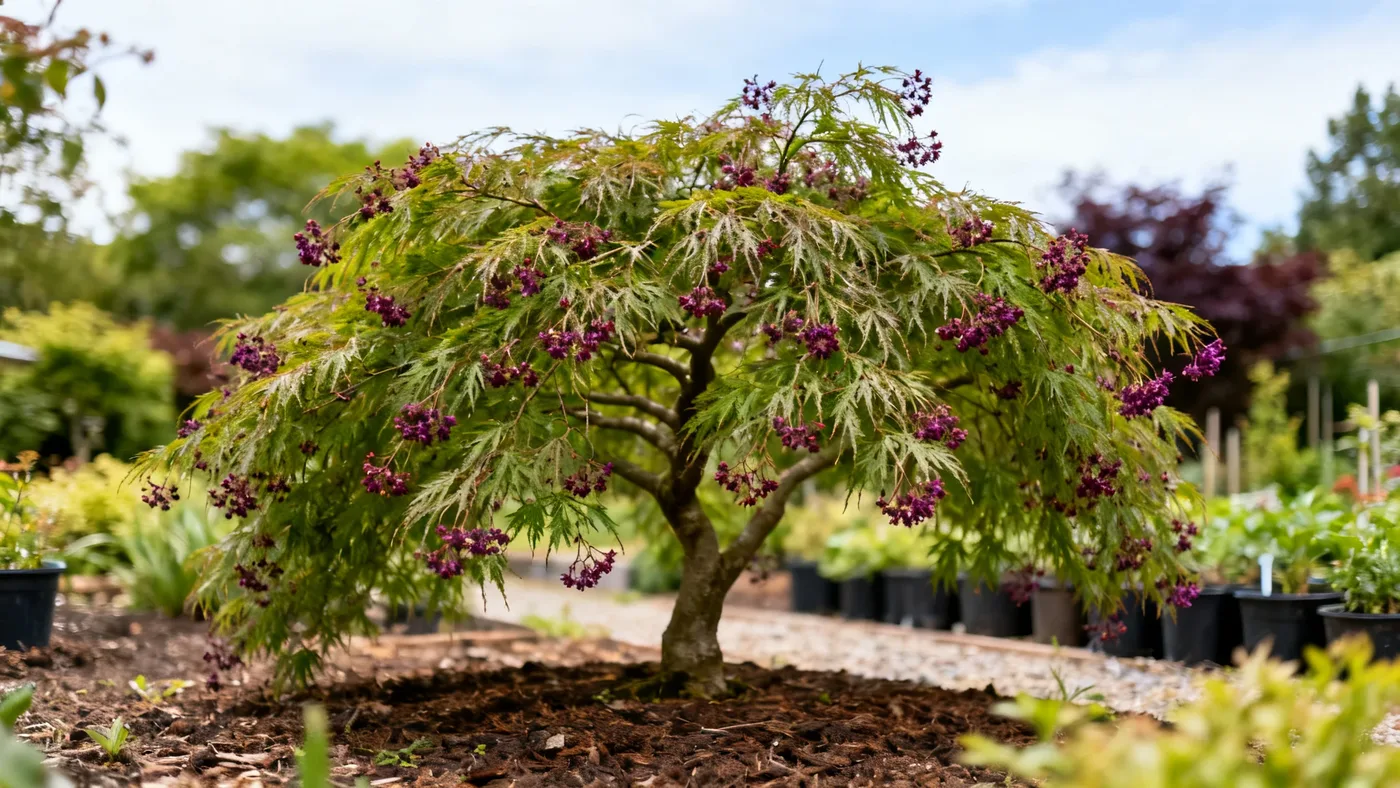
Why Tamukeyama Japanese Maple Fall Color Turns Fiery Crimson
Late September through October is peak display time for Tamukeyama Japanese Maple. The plant's genetics favor deep red-purple foliage that intensifies dramatically as temperatures cool. If your tree is about to enter its fall show, understanding what drives that brilliant crimson and how to support it ensures you get the most dramatic display of the season.
The Genetics Behind Tamukeyama's Crimson
Tamukeyama Japanese Maple (Acer palmatum var. dissectum 'Tamukeyama') carries what nursery growers call "deep red" genetics. The cultivar originated in Japan in the 1700s, bred specifically for sustained red foliage through the growing season, not just a fleeting spring or autumn display.
Unlike many weeping Japanese maple varieties that green out significantly in summer heat, Tamukeyama maintains red-purple tones from spring emergence all the way through early fall. That consistency is one reason it ranks among the most dependable color-holding dissectum maples you can grow. The finely dissected, lacy foliage itself enhances the effect. Each leaf is thinner and more delicate than the common Acer palmatum form, so light passes through the canopy differently. A backlit Tamukeyama in October becomes nearly luminous.
What happens in fall is not mystery; it is chemistry. As temperatures drop, the tree reduces water transport to leaves and stops producing chlorophyll. That green mask recedes, and the reds and oranges that were always there emerge and intensify. For Tamukeyama, those reds skew toward crimson to scarlet.
Light and Temperature: The Keys to Brilliant Color
Tamukeyama Japanese Maple fall color depends on two primary factors: adequate light and cool nighttime temperatures. Neither is something you create in late September, but understanding them explains what you are seeing now and helps you set up next year's display.
Tamukeyama grows best in full sun to partial shade. In USDA zones 5-8, the tree benefits from afternoon shade in hot-summer climates to prevent leaf scorch. That afternoon shade in late summer is actually an ally for fall color. It reduces heat stress on the leaves, keeping the plant in a steadier metabolic state as autumn arrives. When temperatures drop in October, the tree transitions smoothly into dormancy without the stress of heat-damaged foliage competing for the tree's energy reserves.
Sunlight hours drive pigment production. A Tamukeyama in 6-8 hours of direct sun will develop more intense crimson than one in dappled afternoon shade. Backlit trees, with the sun low and behind them in late afternoon, display the color most dramatically. You are seeing both the pigment itself and light passing through the delicate leaves.
Temperature matters more than any other factor. Nights below 50 degrees Fahrenheit trigger the color shift. That is when the tree stops investing in chlorophyll maintenance and allows the red and orange pigments (carotenoids and anthocyanins) to dominate. The bigger the day-to-night temperature swing, the more intense the color. A crisp 40-degree night after a 70-degree day produces more dramatic crimson than a steady 60-degree night.
You cannot control temperature, but you can influence the tree's readiness to transition into dormancy.
Maximize Your Fall Display Right Now
If your Tamukeyama is already showing color, these steps help deepen and sustain it through October.
Stop fertilizing immediately. A late-summer nitrogen boost pushes tender new growth, which distracts the tree from its autumn shutdown. If you fed in August, stop now. Let the tree redirect energy to color and dormancy preparation.
Water consistently. A well-watered tree colors more evenly. Drought stress causes uneven color development and early leaf drop. Tamukeyama prefers rich, well-drained loam with consistent moisture. Check the soil 2 inches deep. If it feels dry, water slowly to 12-18 inches deep. Weekly watering is typical in September and October if rain is light.
Avoid pruning. Wounds trigger new growth hormones and wound compartmentalization, both pulling energy from the fall color display. If a branch is dead or crossing, remove it after November when the tree is fully dormant.
Position the tree for viewing. A Tamukeyama looks most impressive when backlit by afternoon sun. The lacy foliage becomes nearly translucent. Early morning sun also works well, catching frost-touched leaves at their brightest.
Year-to-Year Variations in Fall Color
Not every autumn produces the same intensity of color. Understanding these variations helps set realistic expectations.
Summer heat and drought. A hot, dry summer, especially with afternoon heat stress despite afternoon shade, weakens the tree's pigment reserves. The plant prioritizes survival over aesthetics, so fall color may be muted. This is most notable in zone 8 gardens with sustained 90-degree-plus heat.
Late-summer rainfall. Cool, wet weather arriving late in September can delay color change until mid-October. Conversely, an early cold snap in late August or early September can start the shift weeks ahead of schedule.
Winter preparation. A Tamukeyama that enters dormancy healthy, with consistent moisture and no late-season stress, emerges the following spring with stronger pigmentation reserves. That carries through the year, supporting a more brilliant fall display.
Tree age and establishment. Mature trees (10-15+ years old and fully established) often produce deeper color than younger specimens. A newly planted Tamukeyama may show softer reds and pinks its first few fall seasons. As the root system expands and the canopy thickens, color intensity usually increases.
Through Peak Fall and Into Winter
As October progresses and temperatures drop below freezing at night, Tamukeyama will begin dropping leaves. That is the signal that the color show has peaked and dormancy is approaching.
Continue watering through November until the ground freezes, if your area experiences hard freezes. The tree needs to enter dormancy fully hydrated. A well-watered maple is more winter-hardy and less prone to stem damage from temperature extremes.
Once all leaves have dropped, you will see the tree's graceful weeping branch structure and attractive bark texture. That winter silhouette is why many gardeners plant Tamukeyama as a four-season specimen. The finely-branched form and mottled bark add visual interest long after the crimson display fades.
If your tree is in a container, move it to a sheltered location before hard freeze if you are in zone 5 or 6. Container roots are less insulated than in-ground roots. Wrapping the container in burlap and placing it against a south-facing wall or under an eave helps roots survive winter temperatures.
Fall Color Support Checklist
| Task | Timing | Why It Matters |
|---|---|---|
| Stop fertilizing | Early September | Prevents late-season growth that delays dormancy |
| Water consistently | Weekly through October | Steady moisture intensifies even color development |
| Position for viewing | Now | Backlit trees display color most dramatically |
| Avoid pruning | September through October | Pruning wounds divert energy from color display |
| Monitor soil moisture | After rainfall | Well-drained loam should stay moist, not waterlogged |
| Move containers to shelter | Late October (zones 5-6) | Protects roots from winter temperature extremes |
Learn More About Year-Round Care
The brilliant crimson display you see in October is the result of centuries of Japanese horticulture that selected Tamukeyama specifically for sustained red foliage and that dramatic fall shift. For guidance on selecting and planting your first Tamukeyama, or caring for an established tree across all seasons, see our complete growing guide and planting instructions. Both cover the full spectrum of this cultivar's needs beyond fall color.
Support your Tamukeyama with consistent light, steady water, and the patience to let natural dormancy happen on its schedule. Your tree will reward you with some of the most vibrant autumn foliage a home garden can grow.