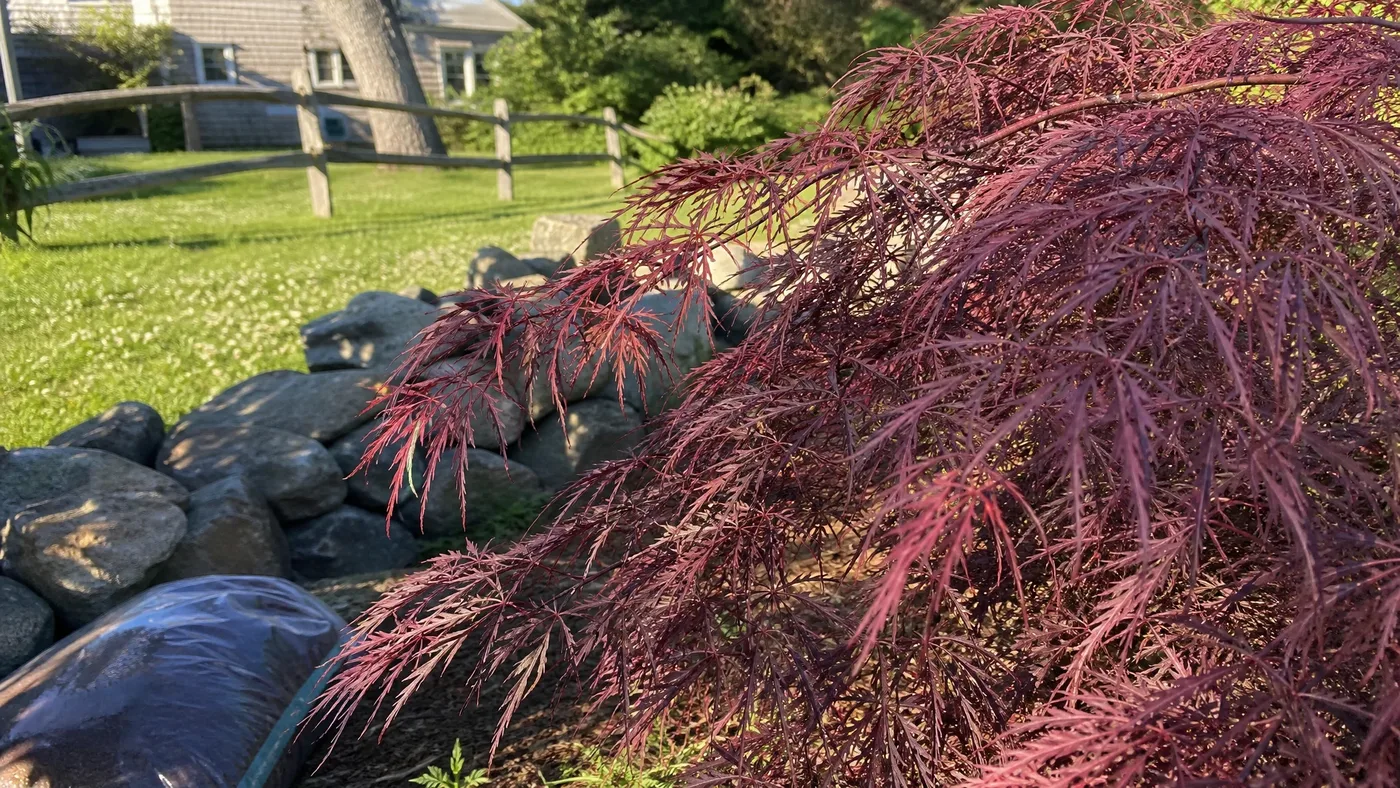
Does Tamukeyama Japanese Maple Stay Red All Summer?
The tag on the pot says red all season. By mid-July you are standing in front of a shrub that looks bronze at the edges and faintly green in the middle, and you are wondering what you did wrong. Most likely, nothing.
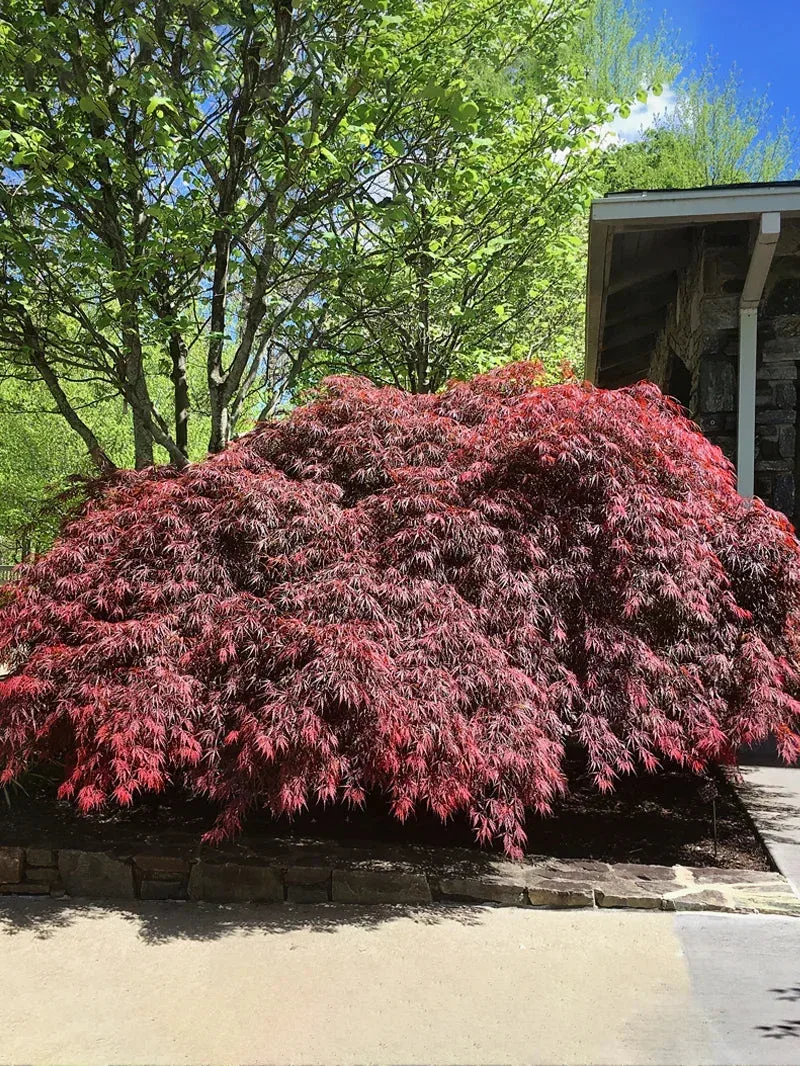
A leaf pigment is a chemical, and chemicals respond to heat and light. A promise printed on a tag has to survive an actual July. Tamukeyama holds its deep red-purple better than most laceleafs, but it still shifts, and the shift tells you something useful.
This article talks about what makes the color, what heat, shade, mulch and water really change, and how to tell normal bronzing from a siting problem, and it answers the questions customers ask us most. Read on to learn what to expect month by month and what is worth doing about it.
How a Tamukeyama Japanese Maple Leaf Makes Its Red
Hold a new Tamukeyama leaf up to the light in May and it glows, bright red at first and then settling into deep red-purple. That glow is not paint. The leaf cells carry red pigments that sit on top of green chlorophyll, and what you see is the net result of both.
The color is a balance, not a fixed trait. As a leaf matures and works through summer, it builds more chlorophyll, and the red pigments have to compete with it. Light and heat push that balance around. Cool, bright spring days favor the red. Long hot stretches favor the green and the brown tones that appear when the two mix.
The laceleaf form makes this more visible. Each leaf is thin and cut into narrow lobes, so there is very little tissue to hold pigment and very little buffer against a hot afternoon. A broad-leaved upright red maple can hide a shift in its thick leaf layers. A weeping laceleaf shows every change.
Our verdict on the tag: "red all season" describes the leaf in spring. For July it is a hope, not a fact.
Why Roots Decide Summer Color in Tamukeyama Japanese Maple
Dig carefully beside an established Tamukeyama and you will not find a taproot. You will find a mat of fine, fibrous roots held in the top layer of soil, spreading well out under the mounded canopy. This slow-growing, mounded plant lives almost entirely in the first stretch of ground that sun and wind reach first.
That has a direct effect on color. Shallow soil heats up faster and dries out faster than deeper soil, so the roots feel a hot, dry July before a deep-rooted tree would. When roots are stressed, they cannot keep up with the water the thin leaves lose. The leaf then dulls first, and the tips crisp if the stress continues.
So the temperature and moisture of the top few inches of soil set how long the color holds. Air temperature matters, but the root zone is the part you can influence. We say it often: you manage a Tamukeyama's summer from the ground up.
This is also why the plant is more forgiving in soil that is moist but well drained and high in organic matter, which our soil guide covers. Heavy, soggy ground brings its own problems, so the goal is steady moisture, never standing water.
What July Heat Does to Red-Purple Leaves
In our rows, the first change is nearly always on the outside of the mound: the leaves facing the afternoon sun dull first, while the ones tucked inside stay richer. By August the whole plant may read as a brownish red. That uneven pattern is the signature of heat and light, not disease.
How Fading Looks
Normal fading is slow and even. The red-purple warms to bronze, maybe with a greenish cast on the shaded interior leaves. The leaves stay flat, supple and whole, and new growth at the tips may still come in red. You lose saturation, not leaves.
How Scorch Looks
Scorch is different. The fine lobes dry at the tips or edges, turn tan to brown and feel crisp. NC State notes that Acer palmatum can scorch from excess sun, wind or drought, and the thin laceleaf leaf tends to show it quickly. Once it happens the tissue does not recover.
Claims We Doubt
Two claims we hear often deserve skepticism. One is that bronzing means the plant is dying. It does not. The other is that a good fertilizer program will bring back the red. It will not, and extra nitrogen can make scorch more likely. For how the plant copes with long hot spells overall, see our guide on drought and heat tolerance.
Does Part Shade Really Preserve the Color?
Take two Tamukeyamas planted a few feet apart, one in open afternoon sun and one under the edge of a high canopy. By August the shaded one is usually the richer of the two. That is the common advice, and it holds up, but only partly.
Part shade does one job well: it cuts the heat and light load on thin leaves in the hottest hours. Morning sun with afternoon shade is the arrangement we recommend, and it keeps both scorch and heavy fading in check. Our sun and shade guide goes through how to read your light.
It does not deepen the red, though, and too much of it backfires. Clemson's extension warns that with too much shade, purple leaves become more green, and growth slows. Deep shade is not a color fix. It trades one loss for another.
Shade also fails to help when the heat arrives from somewhere else. A spot beside a west wall, a driveway or a gravel bed throws reflected heat back at the plant even if the sky above is filtered. Hot, drying wind does the same damage. Light shade with good air movement and no reflected heat is the target.
Mulch, Water, and Leaf Tone in Tamukeyama Japanese Maple
Pull back the mulch under a Tamukeyama in August and feel the soil. Under a good layer it is cool and slightly damp. Where the soil is bare it can be warm and dry an inch down. That difference is the whole argument for mulch, because it is a lever on root temperature, and root temperature is a lever on leaf color.
Mulch Depth
Clemson recommends 3 to 4 inches of mulch beneath the canopy, and we agree with that range. Keep it pulled back from the trunk so it does not hold moisture against the bark. Mulch is also what lets the plant tolerate more light: Missouri State notes the cutleaf form can tolerate full sun if sufficiently mulched. We would still choose afternoon shade first.
Watering Rhythm
The rule that works is deep, infrequent watering at the root zone rather than frequent light sprinkling. The University of Missouri Extension points out that light watering only wets the mulch. Our watering guide covers frequency, but these habits matter most for color:
- Soak the whole root zone slowly so the water reaches below the mulch layer.
- Water in the morning, and aim at the soil, not the foliage.
- Check the soil an inch or two down before watering again instead of following a calendar.
- Skip heavy nitrogen feeding in summer, since excess nitrogen is linked to scorch.
That last point and the foliage point are not folklore. The University of Washington's botanic library summary quotes a Japanese maple authority saying excess nitrogen and wet leaves in the hottest part of the day can lead to scorch.
What They Cannot Change
Mulch and water protect the leaf from stress. They do not stop the pigment balance from shifting in heat. A well-mulched, well-watered Tamukeyama will still bronze in July. It will just do it evenly, with its leaves intact.
Normal Bronzing or a Siting Problem?
A customer once sent us a photo of a plant with a dull, brownish mound and asked if it was dying. The photo showed supple leaves and a few red tips, which is normal bronzing. We hear that question every summer, and the answer depends on whether the leaf is intact.
Signs of a Siting Problem
Scorch that repeats is the real signal. Look for crisp brown tips on the sunny side that return after you have already mulched and watered properly, leaves dropping early in summer, or a plant that looks dull from May onward. The University of Missouri Extension notes that Japanese red maples are more likely to scorch than other small trees, and that scorch comes from the site environment, not an infection.
The same source says that once scorch shows, the damaged tissue is past recovery. The fix is prevention and better conditions in later seasons, so judge by the next summer, not by the leaves you already have. Our list of common Tamukeyama problems helps rule out other causes.
When Moving It Makes Sense
Move the plant if scorch returns in a second summer despite deep watering and mulch, or if the spot gets reflected heat or hot wind you cannot change. Because the roots are shallow, a Tamukeyama moves better than a tree with a deep taproot. Do it while the plant is dormant and check timing with your local extension service.
Reading Your Tamukeyama Japanese Maple Through August
If you watch a well-sited plant from spring to fall, the color follows a predictable path. This table sets out what we expect each month and what to do about it.
| Month | Color you can expect | What to do or accept |
|---|---|---|
| May | Bright red to deep red-purple on new leaves | Enjoy it and mulch before the heat arrives |
| June | Deep red-purple, starting to settle | Begin deep watering in dry spells |
| July | Warming toward bronze, outer leaves first | Accept the shift and watch for crisp tips |
| August | Bronze or greenish-purple, more muted | Keep the root zone moist and do not fertilize |
| September | Color begins to turn as nights cool | Stay the course and wait |
Late summer is the low point for color and not the end of the story. As nights cool, the leaf starts to change again, and the muted August tone gives way to the show we describe in our guide to fall color. A plant that looked tired in August can still finish strong.
An Honest August Expectation for Tamukeyama
The evidence points to a clear answer. Tamukeyama does not stay red all summer, but it holds its color better than most laceleafs and fades toward bronze rather than falling apart. Expect a muted August, with leaves that are whole and supple, and a recovery in fall.
Change the site only when the evidence says to: scorch that returns in a second summer, reflected heat or wind you cannot remove. Fading alone is not a reason to move a plant.
Tamukeyama Japanese Maple
Nursery-grown Tamukeyama Japanese Maple in sizes from 5 Pot 2-3 ft, shipped to your door.
From $182.10
Shop Now →Color is the reason we raise Tamukeyama in part shade with moist, well-drained soil on our farms, since that is the setting where the leaves keep their depth into August. Every plant we sell comes from growers who tend it ourselves from start to finish, and we only offer top-quality trees. If you would like to see a good August for yourself, begin with one of ours.