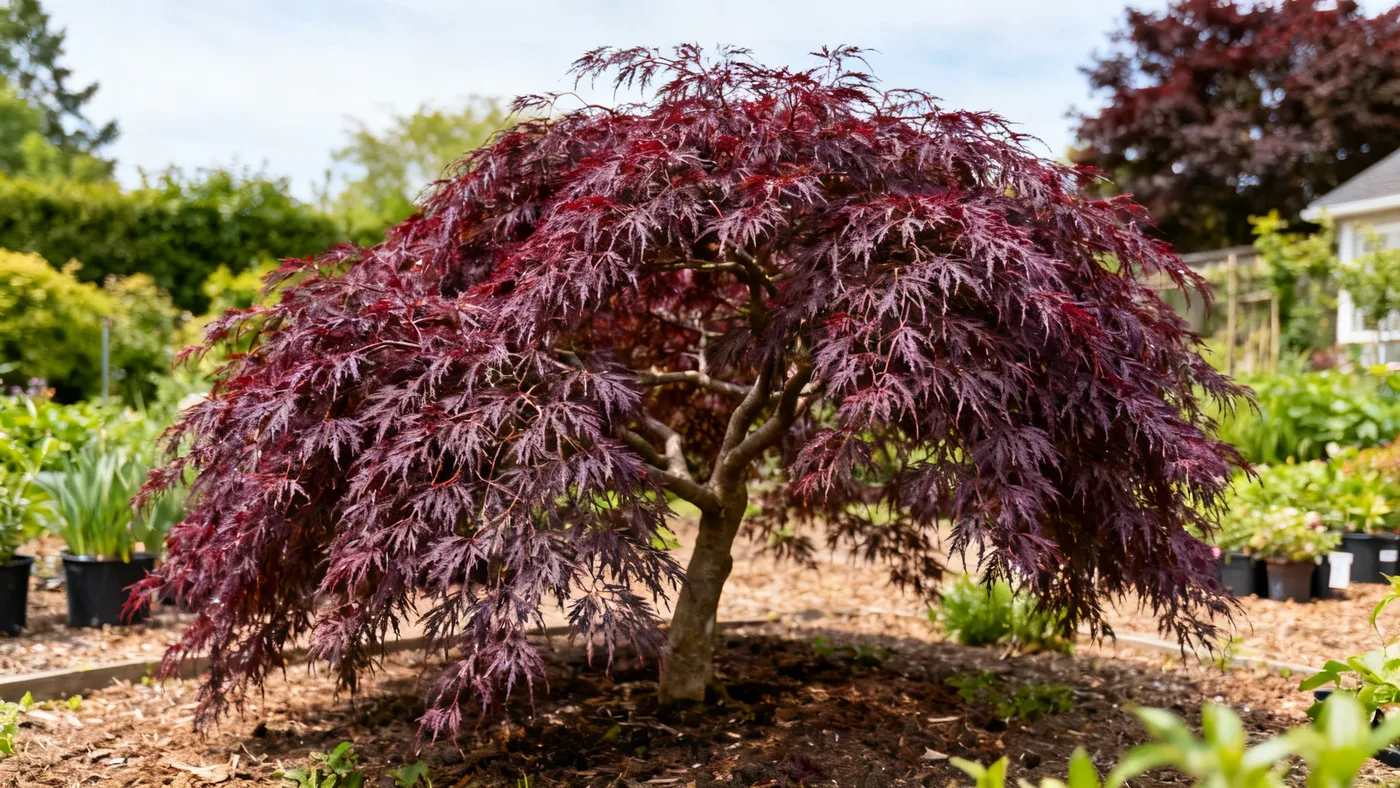
Is Tamukeyama Japanese Maple Drought and Heat Tolerant?
The direct answer: Tamukeyama Japanese Maple has low to moderate drought tolerance once established, and young plants require consistent moisture. It is not a drought-resistant plant, and in intense heat without proper siting and water management, it will experience leaf scorch. However, Tamukeyama thrives in zones 5-8 and can be grown successfully in zone 9 with careful attention to afternoon shade and consistent watering.
Understanding Tamukeyama's Water Needs
Tamukeyama has what horticulturists call "moderate" water requirements, which means it needs regular, consistent moisture in well-drained soil. This is different from drought-tolerant plants that can go extended periods without water. Think of Tamukeyama as a plant that prefers steady conditions, not a plant built to survive neglect.
Young plants are more sensitive than established specimens. A newly planted Tamukeyama that's only had one or two growing seasons needs more frequent watering than a mature tree that's been in the ground for several years. This is because young roots haven't yet developed the depth to access moisture deeper in the soil.
Container-grown Tamukeyama has even higher water demands than in-ground plants. Soil in containers dries faster, especially in warm weather, so you will need to water more frequently than you would for the same plant in the ground.
What Heat and Drought Stress Look Like
Before you can manage heat and drought stress, you need to recognize when it's happening. Tamukeyama shows several clear warning signs before serious damage occurs.
Leaf scorch is the most common visible symptom. You will see browning or yellowing at the leaf edges and between the veins, especially on the outer portions of the canopy that receive the most sun. The leaf edges may look papery or curled. In intense cases, entire leaves may drop prematurely, even during summer when the tree should be fully leafed out.
Slowed growth is another indicator. Tamukeyama normally grows 6 to 12 inches per year. If your tree is noticeably slower than this range year after year, heat or drought stress is likely limiting its growth.
Wilting or drooping leaves during the day, even after watering, suggests the plant is working harder than it should to manage water loss in heat.
How to Grow Tamukeyama Successfully in Warm Climates
Growing Tamukeyama in warm areas requires deliberate planning. Follow these steps before and after planting.
Materials and Preparation
- Well-draining planting soil or compost rich in organic matter
- Mulch such as aged bark or wood chips (2 to 3 inches deep)
- Slow-release balanced fertilizer formulated for acid-loving plants
- Watering system (soaker hose, drip line, or hand-watering wand)
- Optional: shade cloth or a location near existing trees that provide afternoon shade
Step-by-Step Planting and Care
Step 1: Verify Your USDA Zone and Summer Conditions
Tamukeyama is reliably hardy in zones 5-8. If you are in zone 9, success depends heavily on afternoon shade and consistent water. Check your local USDA hardiness zone and assess whether your area has intense afternoon heat (above 90°F regularly in summer). If it does, afternoon shade becomes non-negotiable.
Step 2: Select a Planting Location
Choose a spot that receives full sun to partial shade, but prioritize afternoon shade in warm climates. Morning sun with afternoon shade (roughly 2 to 4 hours of direct sun after 1 PM) is ideal in zones 8-9. In cooler zones 5-6, full sun is acceptable. Avoid locations exposed to hot afternoon winds, which accelerate moisture loss from leaves.
Step 3: Prepare the Soil
Tamukeyama prefers slightly acidic to neutral soil with a pH between 5.5 and 6.5. Test your soil first. If it is alkaline or clay-heavy, amend it with peat moss, compost, or aged wood chips to improve drainage and acidify the mix. Well-drained soil is essential because waterlogged roots are as harmful as drought stress. The soil should feel moist but not soggy when you squeeze it.
Step 4: Plant at the Right Time
Plant Tamukeyama in early spring or fall, avoiding extreme summer heat or winter freeze at planting time. Spring planting gives the roots time to establish before summer heat arrives. Fall planting also works well in many regions, provided the tree has at least 4 to 6 weeks before the first hard frost.
Step 5: Establish a Watering Routine
Water deeply at planting and every 2 to 3 days for the first 2 to 3 weeks. After that, gradually extend the interval as the root system establishes. By mid-summer of the first year, you should be watering once or twice per week, depending on rainfall and temperature. During peak summer heat, young plants may need water every 3 to 4 days. Check the soil 2 to 3 inches deep: if it feels dry, water. If it's still moist, wait another day.
Step 6: Apply and Maintain Mulch
Apply 2 to 3 inches of aged bark or wood-chip mulch around the base, keeping it 3 to 4 inches away from the trunk to prevent rot. Mulch moderates soil temperature and retains moisture during dry spells. Refresh mulch yearly in late spring.
Step 7: Monitor for Stress and Adjust Care
Throughout the growing season, check leaves for signs of scorch or wilting. If you see early scorch despite regular watering, consider adding temporary shade cloth or moving the tree to a shadier location the following spring. If the tree wilts even after watering, check for root rot by inspecting the soil for a sour smell or examine the roots for dark, mushy tissue.
Step 8: Fertilize Lightly in Early Spring
In late winter or early spring, apply a light dose of balanced, slow-release fertilizer formulated for woody ornamentals or acid-loving plants. Avoid excess nitrogen, which promotes weak growth susceptible to heat damage. One application per year in spring is sufficient.
Watering Strategies for Heat and Drought Conditions
Watering is your most powerful tool for managing heat and drought stress. Here are proven strategies.
Consistent Moisture Beats Deep Watering
Many gardeners assume deep, infrequent watering is best. For Tamukeyama, consistency matters more than depth. Regular watering keeps the root zone evenly moist without waterlogging. A soaker hose or drip line that runs for 30 to 45 minutes twice per week in summer is more effective than a single deep soaking.
Water in Early Morning
Water before 9 AM to allow foliage to dry quickly and reduce disease risk. Wet foliage in afternoon heat can cause additional stress to the plant.
Increase Frequency During Heat Waves
When temperatures exceed 90°F for several consecutive days, water more often. Check soil moisture every other day and water if the top 2 inches are dry.
Container Plants Need Extra Attention
Tamukeyama in containers dries faster than in-ground plants. In summer, water every 1 to 2 days depending on pot size and temperature. Larger containers (at least 15 gallons or 60 liters) retain moisture better than small ones.
Use Mulch to Extend Watering Intervals
Mulch reduces water loss from the soil surface by up to 50 percent, meaning you can water less frequently while maintaining the same soil moisture level.
Choosing the Right Location and Shade Strategy
Location is often the determining factor in whether Tamukeyama thrives or merely survives in warm areas. Full afternoon sun in zone 8 or 9 often triggers leaf scorch even with perfect watering. A few practical solutions exist.
Plant Near Taller Trees
The most effective strategy is to place Tamukeyama where it receives dappled or afternoon shade from nearby deciduous trees. Space it 8 to 10 feet from the other trees so roots do not compete directly.
Use Shade Cloth in Containers
If your Tamukeyama is in a pot, position it where a nearby wall, fence, or large plant shades it from 1 PM onward. You can also drape 30 to 50 percent shade cloth over the pot on the hottest days (above 95°F), securing it loosely so air still circulates.
Take Advantage of Microclimates
East or north-facing garden locations are naturally cooler than south or west-facing spots. An east-facing site receives gentle morning sun and afternoon shade, an ideal balance for warm zones.
Quick Reference: Tamukeyama Drought and Heat Management
| Condition or Task | Recommendation |
|---|---|
| USDA Zone | Zones 5-8 reliably; zone 9 with afternoon shade |
| Drought Tolerance | Low to moderate; not a drought plant |
| Young Plant Watering | Every 2 to 4 days during first growing season |
| Established Plant Watering (summer) | Once or twice weekly; more in heat waves |
| Container Plant Watering (summer) | Every 1 to 2 days depending on pot size |
| Best Sunlight Exposure | Full sun to partial shade; afternoon shade in zone 8-9 |
| Ideal Soil pH | Slightly acidic to neutral, 5.5 to 6.5 |
| Mulch Depth | 2 to 3 inches, kept 3 to 4 inches from trunk |
| Expected Growth Rate | 6 to 12 inches per year (slow) |
| Planting Season | Early spring or fall, avoiding extreme heat or cold |
| Spring Fertilizing | Light application of balanced slow-release formula |
| Common Stress Sign | Leaf scorch (brown or yellow leaf edges and margins) |
Related Resources
For comprehensive care guidance beyond drought and heat management, see Tamukeyama Japanese Maple Care: The Complete Growing Guide, which covers pruning, pest management, seasonal care, and year-round maintenance.