How to Water a Tamukeyama Japanese Maple Without Overdoing It
Watering a Tamukeyama Japanese Maple sits at the heart of keeping this finely-dissected tree healthy. The fine lace-like foliage and graceful weeping form are stunning when conditions are right, but the plant is unforgiving when water management goes wrong. Too little and you invite leaf scorch; too much and you risk root rot in poorly drained soil. This guide shows you exactly how to read your tree's needs and water on a schedule that keeps it thriving without the guesswork.
Understanding Tamukeyama Watering Needs
Tamukeyama Japanese Maple requires moderate, regular watering with consistent moisture in well-drained soil. The key word here is "consistent": the soil should stay moist but never soggy. Young plants need especially careful attention, as drought stress during the first growing season can set them back months. Established trees (3 years or older) develop moderate drought tolerance, but they still prefer reliable water rather than feast-or-famine cycles.
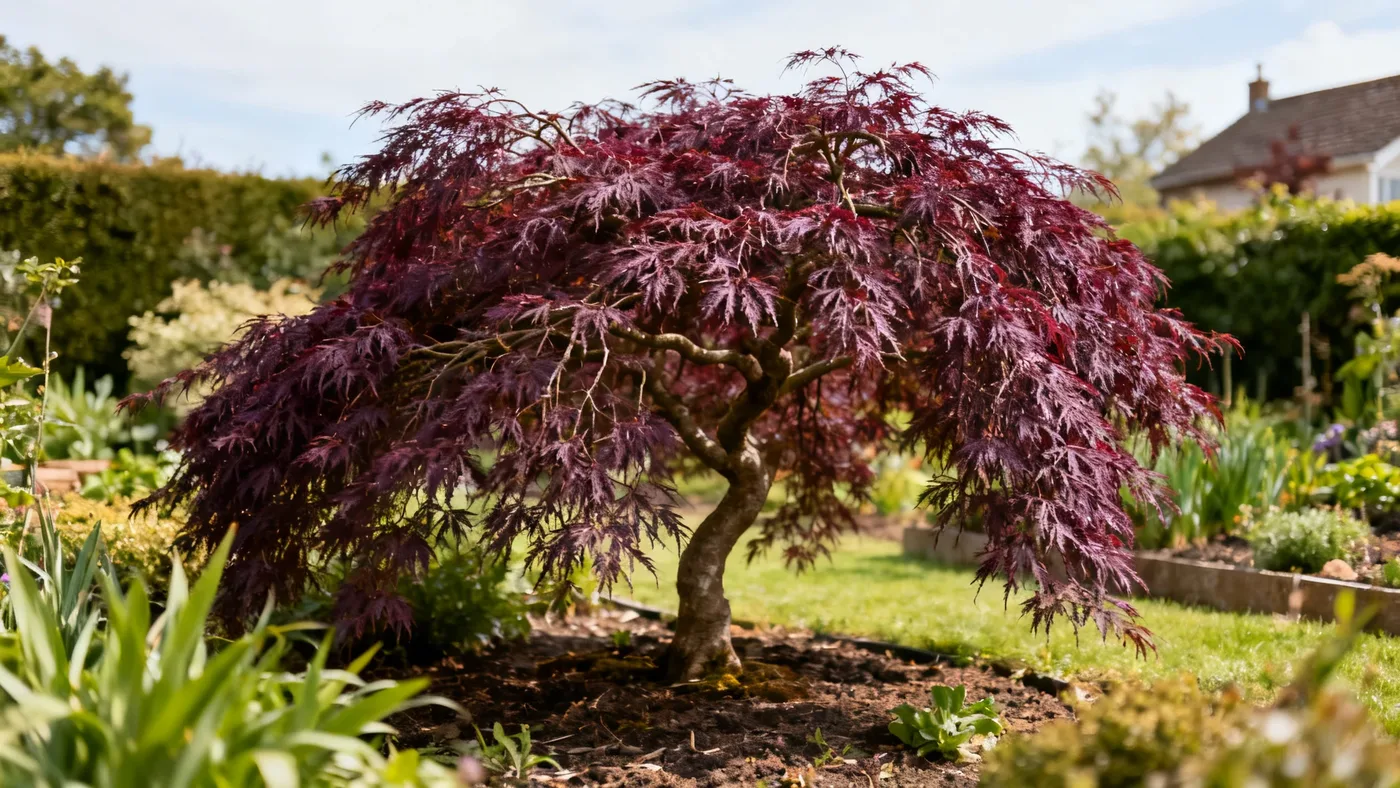
The challenge many home gardeners face is that Tamukeyama looks deceptively tough. Its slow growth and compact form suggest drought toughness, but looks deceive. This cultivar holds its deep red-purple foliage through summer better than many other dissectum maples, which actually makes it more sensitive to the sun and heat stress that dry soil invites. Leaf scorch, that papery brown damage on leaf edges, often traces back to erratic watering during hot spells.
Container-grown specimens need even more attention than in-ground trees. Soil in pots dries faster, especially in zones with warm summers. If your Tamukeyama lives in a pot on a patio, expect to water more frequently than a tree planted in garden soil.
Materials and Tools You'll Need
- Soaker hose or drip irrigation line (preferred over overhead watering)
- Garden hose with spray nozzle set to mist or gentle flow
- Mulch (2 to 3 inches of bark chips or compost)
- Soil moisture meter or finger test method
- Rain gauge (optional but helpful for tracking natural rainfall)
- Well-draining potting soil (for container planting) or rich loam amendment (for garden beds)
- Watering can or bucket with drainage holes for potted trees
Step-by-Step Watering Instructions
Step 1: Assess Your Soil Before Watering
Push your finger into the soil 2 to 3 inches deep near the tree's base, staying outside the immediate drip line. If the soil feels sticky and cool, don't water yet. If it feels crumbly or dry at that depth, watering is needed. This single habit stops most overwatering before it starts.
For container trees, the finger test works even better because pots dry from the top down. Check daily during hot weather and less frequently in cool seasons.
Step 2: Water Deeply and Slowly
Water the soil, never the foliage. Overhead watering invites fungal problems and misses the root zone anyway. Use a soaker hose or drip line placed at the base, allowing water to seep in slowly for 30 to 45 minutes, depending on soil type and pot size. Fast, hard watering with a spray nozzle washes water off the surface without penetrating the root zone.
Aim to wet the soil to a depth of 6 to 8 inches for in-ground trees. For container plants, water until you see it drain from the pot bottom, then allow excess to drain completely before returning the pot to its saucer.
Step 3: Establish a Watering Schedule Based on Season
Spring (April through May): Tamukeyama enters its bloom period and active growth. Water when the top 2 inches of soil feel dry. This typically means watering every 5 to 7 days, depending on rainfall and temperature.
Summer: Heat accelerates evaporation. Water every 3 to 5 days if your area receives less than 1 inch of rain per week. In zones 7 and 8, afternoon shade becomes crucial to prevent leaf scorch; combine shade with consistent watering to keep the tree's iconic red color without edge burn.
Fall: As temperatures drop in September and October, reduce watering frequency. The tree is preparing for dormancy. Water when the top inch of soil feels dry, roughly every 7 to 10 days.
Winter: In zones 5 through 8, the tree is fully dormant. Container trees need less frequent watering, roughly every 10 to 14 days if there's no snowcover. In-ground trees in freezing climates rely on snowmelt and winter precipitation. Do not water during hard freezes.
Step 4: Mulch to Regulate Soil Moisture
Apply 2 to 3 inches of bark chips, compost, or wood mulch around the tree's base, keeping mulch 3 to 4 inches away from the trunk to prevent bark damage. Mulch reduces surface evaporation and keeps roots cooler in summer. In zone 8 and warmer climates, mulch also insulates roots during the occasional cold snap. Refresh mulch annually as it breaks down.
Step 5: Adjust for Container Growing
Container specimens dry faster than in-ground trees and need more vigilant watering. In summer, a pot may need water every 2 to 3 days. Use only pots with drainage holes, and never let standing water sit in the saucer for more than an hour. In zones 5 and 6, container trees need winter protection in a cool garage or sheltered location, with watering reduced to once every 2 to 3 weeks.
Tips to Get Watering Right
- Water in the early morning before 10 a.m. This gives the soil time to absorb moisture before the heat of the day. Evening watering can promote fungal issues in humid regions.
- Account for rainfall. If your area received 1 inch or more of rain last week, skip supplemental watering. Use a rain gauge or check your local weather station's recorded totals.
- Feel the soil, don't guess. Soil can look dry on top but be moist 3 inches down. Trust the finger test.
- Use a drip system or soaker hose. They deliver water directly to the root zone and reduce waste. Overhead sprinklers may saturate foliage and miss roots.
- Check container drainage regularly. If a pot's saucer fills with water after every watering, either the pot lacks drainage holes or you're watering too fast. Pause and let water drain fully before rewatering.
- Reduce nitrogen fertilizer. Excess nitrogen pushes weak growth that's more drought-sensitive. Stick to light feeding in early spring with a balanced, slow-release fertilizer formulated for woody ornamentals.
Common Watering Mistakes to Avoid
Overwatering on a fixed schedule. Watering every Monday and Friday, regardless of weather, is the top cause of problems. Soil moisture changes with temperature, rainfall, and season. The finger test is your best guide, not a calendar.
Allowing pots to sit in standing water. A saucer that collects water is a petri dish for root rot. Tamukeyama tolerates well-drained soil but not Phytophthora or verticillium wilt, which thrive in waterlogged conditions. Empty saucers after 1 hour.
Watering shallow and often. This encourages roots to stay near the soil surface, making the tree more drought-sensitive. Water deeply and less often to train roots to reach deeper, more stable moisture.
Planting in clay-heavy soil without amendment. Tamukeyama tolerates some clay if drainage is adequate, but pure clay holds water too long. Mix in compost or sand to improve structure.
Ignoring seasonal changes. Watering a dormant tree in January the same way you water it in July guarantees problems. Adjust frequency and volume as the tree's growth cycle shifts.
Spraying foliage instead of soil. Wet leaves are an invitation to fungal disease and don't deliver water to roots. Always water at the base.
What to Expect After Proper Watering
When you hit the watering rhythm right, your Tamukeyama responds noticeably. Foliage holds its deep red-purple color through summer without edge scorch or yellowing. New shoots appear steady and fine-textured, not weak or stunted. The tree grows roughly 6 to 12 inches per year, which is normal for this slow-growing cultivar. In fall, leaves transition to crimson to scarlet red rather than fading to dull brown.
The tree's graceful weeping form becomes more defined as branches strengthen and elongate. Container specimens remain vigorous and develop a well-proportioned silhouette. These signs indicate that your soil moisture and drainage are in balance.
Conversely, if you see papery brown edges on leaves in summer, the tree may be experiencing drought stress, even if you're watering. Check soil depth, mulch coverage, and afternoon shade. If leaves yellow overall and growth slows to nothing, overwatering or poor drainage is likely. Review the soil texture and consider repotting container specimens into fresh, well-draining medium.
Watering and Pruning Work Together
Proper watering supports healthy branch development, which makes pruning easier and safer. When you do need to prune a Tamukeyama Japanese Maple, consistent moisture before and after pruning reduces stress and promotes healing. Avoid heavy pruning during dry spells; instead, prune in late fall through winter dormancy, when the tree's water demands are low.
For a complete care picture, review our Tamukeyama Japanese Maple care guide to see how watering fits into the broader context of soil, sun, feeding, and seasonal management.
Quick Reference: Tamukeyama Watering Checklist
| Condition or Season | Action | Frequency |
|---|---|---|
| Spring (April-May) | Keep soil moist; active growth period | Every 5-7 days if no rain |
| Summer (June-August) | Water deeply; provide afternoon shade in zones 7-8 | Every 3-5 days if rain <1 inch/week |
| Fall (September-October) | Reduce watering as growth slows | Every 7-10 days |
| Winter (November-February) | Minimal watering; dormant tree | Every 10-14 days or none if snow covers |
| Container, any season | Use pots with drainage; allow saucer to empty | Every 2-3 days in heat; check soil first |
| Finger test: dry 2-3 inches down | Water slowly and deeply | 30-45 minutes per session |
| After planting or repotting | Water thoroughly to settle soil | Daily for first 2 weeks |
| Mulch layer (2-3 inches) | Apply and refresh annually | Reduces evaporation year-round |