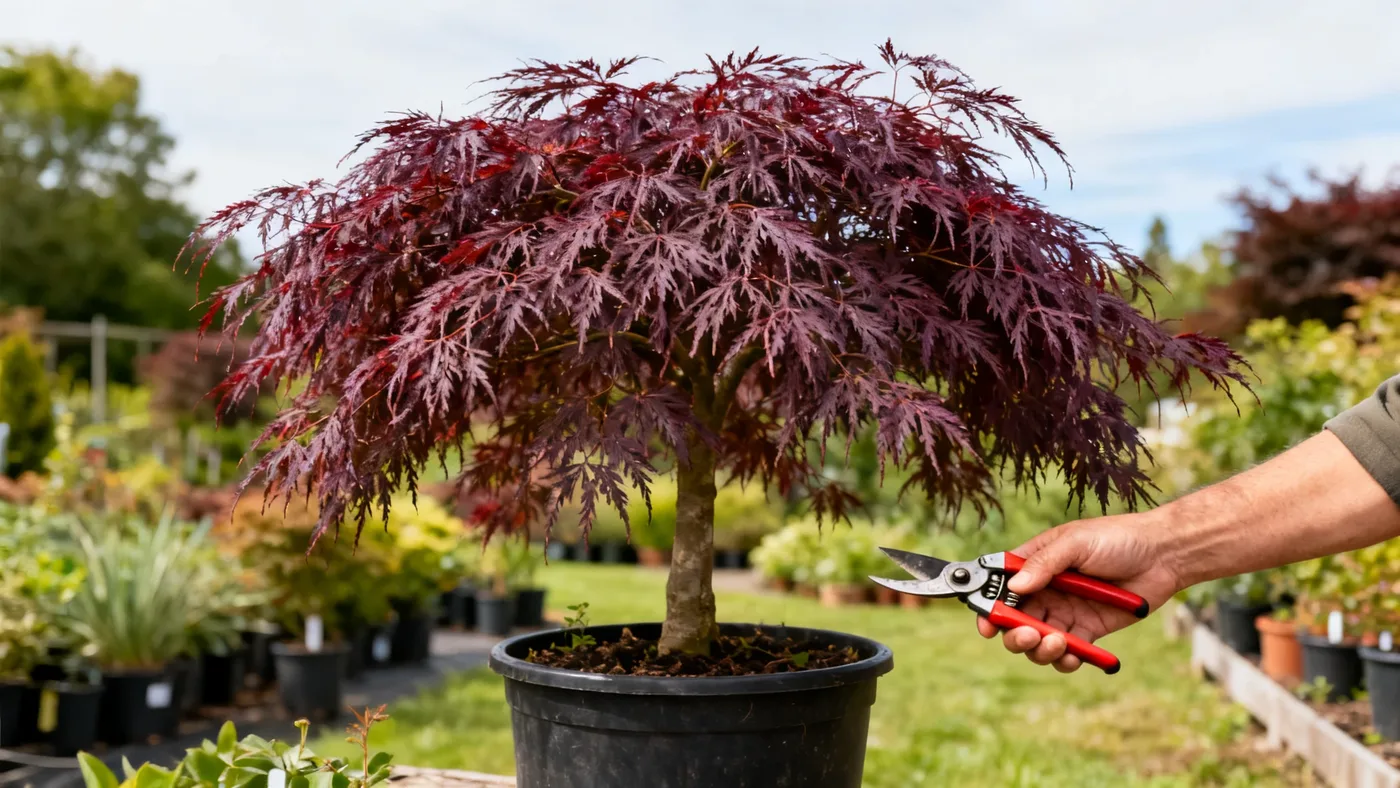
When and How to Prune a Tamukeyama Japanese Maple
Tamukeyama Japanese Maple is celebrated for its naturally graceful, cascading form. The good news: you don't need to prune it heavily or often. In fact, this weeping Japanese maple thrives with minimal intervention. When pruning becomes necessary, to remove dead wood, crossed branches, or downward-growing limbs, timing and technique matter far more than frequency.
This guide walks you through when to prune a Tamukeyama, what tools to use, and how to keep your tree healthy without overdoing it.
Why Tamukeyama Needs Minimal Pruning
Tamukeyama Japanese Maple develops its signature weeping silhouette on its own. Unlike upright maples or dense shrubs, this cultivar's architecture is already refined. Heavy pruning stresses the tree and can weaken its structure for years afterward. That said, dead branches, crossing limbs, and limbs growing downward into the canopy benefit from removal. The goal is not to reshape the tree but to support its health and natural form.
When to Prune Tamukeyama Japanese Maple
Timing is the single most important factor when pruning a weeping Japanese maple. The best window runs from late fall through winter dormancy. This means late October through February in most zones.
Why this timing? During dormancy, the tree has sealed off its wounds and redirected energy to root storage. You can see the full branch structure without foliage in the way. The tree experiences less stress and heals faster than if you pruned in growing season. A fresh pruning in late winter also removes any winterkill or freeze damage before new growth begins in spring.
Never prune a Tamukeyama in spring or summer. Active growth and warm temperatures make wounds vulnerable to disease and pest entry. Pruning during bloom time in April or May disrupts the tree's energy reserves right when it needs them most.
Materials and Tools You'll Need
Keep your toolkit simple and sharp. Dull blades tear bark and create ragged wounds that heal slowly.
- Hand pruners (bypass style): Use these for branches up to 0.5 inches in diameter. Bypass pruners (scissors-like action) are safer for living wood than anvil pruners.
- Loppers: For branches 0.5 to 1.5 inches thick. Choose ones with at least 20-inch handles for leverage without strain.
- Pruning saw: A curved or folding pruning saw handles branches thicker than 1.5 inches. Keep it sharp; a dull saw leaves ragged cuts.
- Pruning sealer or wound dressing: Optional, but many arborists no longer recommend it. If you use one, choose a product made for ornamental trees.
- Disinfectant (rubbing alcohol or 1 part bleach to 9 parts water): Wipe your tools between cuts if removing dead or diseased wood, especially if working between multiple trees.
- Work gloves: Leather gloves protect your hands from sharp branches and the finely divided foliage.
- Safety glasses: Especially when removing limbs overhead.
Step-by-Step Pruning Instructions
Follow these steps during late fall or winter dormancy. Work slowly; Tamukeyama's slow growth rate (roughly 6 to 12 inches per year) means every branch takes years to replace.
Step 1: Inspect the Entire Tree
Before making any cuts, walk around the tree and observe its shape. Look for branches that are clearly dead (brittle, gray, with no buds). Mark them mentally or gently tag them with string or tape. Note any branches that cross over others, creating rubbing zones. Identify limbs that dip downward below the main canopy structure, especially if they touch the ground or impede foot traffic.
Remember: the goal is to preserve the tree's natural form. If a branch is healthy and part of the weeping silhouette, leave it alone.
Step 2: Remove Dead or Diseased Wood First
Dead wood is your priority. Using a pruning saw if necessary, remove entire dead branches back to the branch collar (the swollen area where the branch meets the trunk or a larger limb). Don't leave stubs. A stub becomes an entry point for disease.
If you encounter diseased branches, you may want to disinfect your tools with rubbing alcohol or a 1:9 bleach-water solution between cuts to avoid spreading the problem to healthy wood.
Step 3: Remove Crossing or Rubbing Branches
Look for branches that cross over each other or rub together. These create wounds and weak points. Choose which branch to keep: typically the one that grows in a direction that enhances the tree's form, or the one in better health. Remove the other one cleanly at the branch collar.
Step 4: Prune Downward-Facing Limbs
Some branches naturally weep and touch ground. That's part of the charm of a Tamukeyama. However, if a branch grows steeply downward into the canopy interior, or if it drags on the ground and collects debris, consider removing it.
Make a clean cut at the branch collar. Don't top the branch partway along its length, as this promotes weak, spindly growth.
Step 5: Thin Interior Growth (Optional)
If the center of the tree feels very dense and airflow is restricted, you may gently thin a few older or weaker interior branches. Remove no more than 10 to 15 percent of the foliage. This subtle thinning reduces disease pressure without radically changing the tree's appearance.
Step 6: Step Back and Assess
After each major cut, step back 10 feet and look at the overall shape. This prevents you from removing too much and helps you see the cumulative effect of your work. A Tamukeyama should still read as a weeping form, wider than it is tall, with a graceful cascade of fine-textured foliage.
Tips for Successful Pruning
- Use sharp tools every time. A clean cut closes faster and heals better than a torn or crushed wound. Sharpen or replace saw blades and pruner blades annually.
- Prune on a dry day. Wet wood is slippery and harder to cut cleanly. It also creates conditions for fungal spores to enter wounds.
- Never use pruning paint or heavy wound sealant unless the tree is already weakened. Most trees compartmentalize their own wounds. Heavy sealers can trap moisture and actually slow healing.
- Avoid pruning if the tree is stressed. If your Tamukeyama is recovering from drought, severe winter, or transplanting, defer pruning until the next dormant season.
- Prune only what you can reach safely. Never stand on a ladder to remove large branches overhead on a Tamukeyama. The weeping form is low and spreading; if you need a ladder to reach a branch, consult a certified arborist.
- Accept the tree's slow growth rate. Tamukeyama grows roughly 6 to 12 inches per year. Any branch you remove takes many years to replace. Be conservative.
Common Mistakes to Avoid
- Pruning in summer heat. Wounds are vulnerable during active growth. Wait for dormancy.
- Heavy pruning all at once. Removing more than 20 percent of the canopy in a single season stresses the tree and can trigger disease or pest problems. Spread major work over multiple dormant seasons if needed.
- Topping branches. Cutting a branch halfway along its length creates weak, dense regrowth. Always cut to the branch collar or remove the entire branch.
- Leaving stubs. A stub is a wound that can't heal properly. Always cut to the branch collar where the branch meets the trunk or a larger limb.
- Removing branches to 'open up the center.' Tamukeyama's dense foliage is part of its appeal. The tree naturally sheds lower leaves and branches as it matures. Don't force open the canopy unless disease or structural problems demand it.
- Ignoring the tree's natural form. This is a weeping cultivar. It should look like a fountain of fine-textured foliage, not an upright shrub or a cloud shape. Let the tree's natural architecture guide your cuts.
What to Expect After Pruning
A lightly pruned Tamukeyama should show no visible effect. The tree's natural grace is so refined that removing a few dead or crossing branches feels invisible. You may notice a slight tidying of the silhouette and improved airflow within the canopy, but the overall appearance should remain unchanged.
If you've removed significant wood (which is rare for a healthy Tamukeyama), the tree may look slightly thinner for a year. New growth in spring will gradually fill in any gaps. Because of the slow growth rate (6 to 12 inches per year), do not expect rapid recovery. A Tamukeyama takes its time.
Pruning does not increase flowering or change foliage color. The deep red-purple leaves that hold color through summer will continue to do so regardless of pruning, as long as the tree receives full sun to partial shade and afternoon shade in hot-summer zones. Fall color in crimson to scarlet should also remain unchanged.
For more detailed care information, see our complete Tamukeyama Japanese Maple growing guide.
Quick Reference: Pruning Checklist
| Task | Details |
|---|---|
| Timing | Late fall through winter dormancy (late October through February) |
| Frequency | Minimal; typically every 2-3 years or as needed for dead/diseased wood |
| What to remove | Dead branches, crossing limbs, downward-growing interior branches |
| What NOT to remove | Healthy foliage that creates the weeping form; avoid heavy shaping |
| Maximum removal per season | No more than 10–20% of the canopy |
| Tools needed | Hand pruners, loppers, pruning saw, disinfectant, gloves, safety glasses |
| Wound care | Clean cuts at the branch collar; sealant optional and often unnecessary |
| Expected results | Improved health and structure; no visible change to overall form |
| Lifespan with proper care | 50–100+ years |