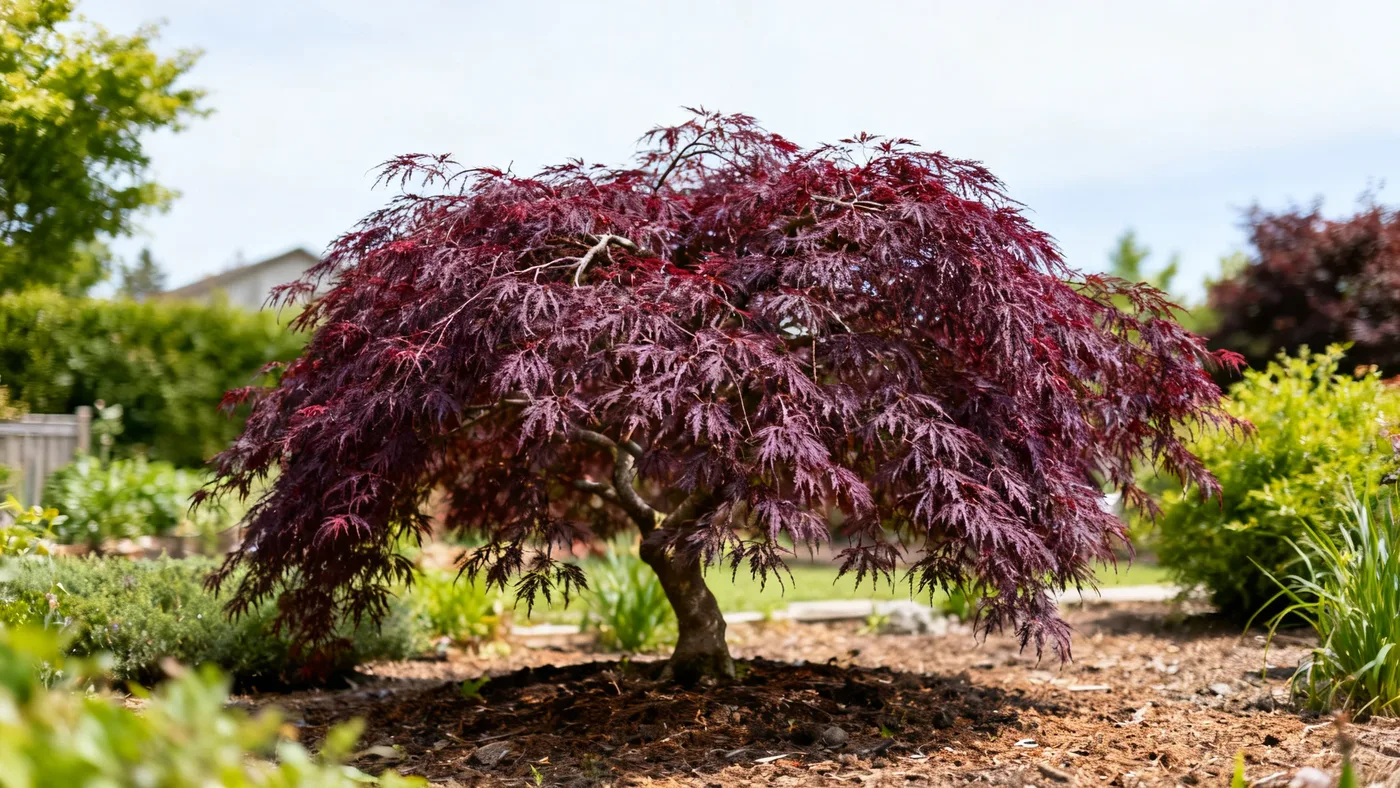
Tamukeyama Japanese Maple Varieties and Look-Alikes Compared
If you are shopping for a weeping Japanese maple with fine, lacy foliage and a graceful cascading form, you have likely seen Tamukeyama, Inaba Shidare, Crimson Queen, and Waterfall mentioned as options. These cultivars look similar at first glance, but they differ in growth habit, color retention, cold hardiness, and long-term performance in the landscape. This comparison will help you choose the right one for your zone, space, and aesthetic goals.
What Makes Weeping Japanese Maples Different
Weeping Japanese maples belong to the dissectum group within Acer palmatum. These are the finely dissected, lacy-leaved trees that look almost feathery. Their branches naturally cascade and weep rather than growing upright, making them excellent specimen plants for focal points, container gardens, and Asian-inspired landscapes.
The main trade-off across the dissectum group is color versus durability. Red and purple foliage often requires afternoon shade in hot-summer zones to prevent leaf scorch, while some green cultivars tolerate more sun without stress. But if deep red color in midsummer is your goal, a red dissectum is the way to go.
Tamukeyama Japanese Maple: The Color Keeper
Tamukeyama is one of the oldest dissectum cultivars, dating to the 1700s in Japan. It is prized for its ability to hold deep red-purple foliage throughout the growing season, even in summer heat. When other red weeping maples fade to green, Tamukeyama typically maintains its color better.
Key specs: Tamukeyama reaches 6 to 10 feet tall and 8 to 12 feet wide at maturity, growing at a slow rate of roughly 6 to 12 inches per year. It thrives in USDA zones 5 through 8, with best performance in zones 5-7. In zone 8, afternoon shade and consistent moisture are essential to prevent leaf scorch. The spring bloom is inconspicuous reddish-purple flowers in April and May, followed by vibrant crimson to scarlet fall color.
Soil and site: Tamukeyama prefers rich, well-drained loam in the slightly acidic to neutral range (pH 5.5 to 6.5). It tolerates partial shade well and benefits from afternoon shade in hot-summer areas. In cooler zones, full sun produces the best color depth.
Pros: Excellent summer color retention; proven cold hardiness to zone 5; graceful weeping silhouette in winter; long-lived (50 to 100+ years with proper care); moderate deer resistance; suits containers and patio plantings.
Cons: Needs consistent watering, especially when young or in containers; low salt tolerance; requires well-drained soil to prevent root rot; slow to fill out, so patience is needed.
Tamukeyama vs. Inaba Shidare
Inaba Shidare is another classic Japanese dissectum, often compared to Tamukeyama because both are red-purple weeping forms. The key differences lie in growth habit and color intensity.
Main distinctions: Inaba Shidare typically grows more upright and compact than Tamukeyama, with a tighter, more formal branching structure. Tamukeyama spreads wider (often reaching 8 to 12 feet across) and cascades more dramatically. Inaba Shidare's color can be slightly deeper or more burgundy in some growing conditions, though both are red-purple cultivars.
Cold hardiness: Inaba Shidare performs well in zones 5-8 (similar to Tamukeyama), but some nurseries list it for zone 4 in protected sites. Check your local extension service for regional performance data.
Container use: Inaba Shidare's more compact habit makes it a popular choice for bonsai-style cultivation and smaller containers. Tamukeyama also thrives in containers but requires a larger pot to accommodate its wider spread.
Pros of Inaba Shidare: Compact, formal silhouette; deep burgundy-red color; strong winter branch structure; good for smaller spaces; adaptable to container growing.
Cons of Inaba Shidare: Less sun tolerance than Tamukeyama in hot zones; similar watering needs; may not hold red color quite as consistently in intense summer heat.
Best for Inaba Shidare: Gardeners in cooler zones (5-7), smaller urban gardens, containers, or those who prefer a more upright, sculptural form.
Tamukeyama vs. Crimson Queen
Crimson Queen is arguably the most well-known weeping Japanese maple in North America and is frequently mistaken for Tamukeyama at nurseries.
Main distinctions: Crimson Queen grows larger and faster than Tamukeyama, often reaching 8 to 12 feet tall and sometimes wider. Its color is a bright crimson-red rather than the deeper red-purple of Tamukeyama. Crimson Queen's foliage tends to green out more noticeably in peak summer heat, especially in zone 8 and zone 9 gardens.
Growth rate: Crimson Queen is faster-growing than Tamukeyama, which means it fills a space sooner but also takes up more room at maturity. If you have limited space, Tamukeyama's slower growth and slightly smaller footprint may be advantageous.
Summer color: This is where Tamukeyama pulls ahead. Tamukeyama holds its red-purple color through summer better than Crimson Queen, which often fades to bronze-green in July and August unless given afternoon shade and consistent moisture.
Pros of Crimson Queen: Vigorous, fills space quickly; widely available; bright, eye-catching spring and fall color; good winter branch structure; hardy to zone 5.
Cons of Crimson Queen: Summer color fades to green in heat; larger mature size; requires more pruning to maintain shape; less consistent performance in hot zones.
Best for Crimson Queen: Cooler zones (5-7) where it retains color longer; large landscape beds; gardeners who want fast fill and do not mind fading to bronze-green in summer.
Tamukeyama vs. Waterfall Japanese Maple
Waterfall is the odd one out in this comparison because it is a green-leaf dissectum, not a red-purple form. It is included here because many gardeners see the name and assume all dissectum weepers follow the same rules.
Main distinctions: Waterfall has bright green, finely dissected foliage that turns golden-orange to scarlet in fall. It cascades and weeps just as dramatically as Tamukeyama but offers a completely different summer aesthetic. Waterfall tolerates more sun than red dissectums and does not suffer leaf scorch as easily.
Cold hardiness and climate: Waterfall is hardy to zones 5-8 (similar to Tamukeyama) and often performs better in zone 8 and zone 9 gardens because its green foliage is less prone to sun damage. If you live in a hot-summer climate and want a weeping maple without the worry of leaf scorch, Waterfall is a smart choice.
Growth habit: Waterfall reaches 6 to 10 feet tall and spreads similarly to Tamukeyama. Growth rate is slow to moderate, comparable to other dissectums.
Pros of Waterfall: Sun-tolerant; no leaf-scorch risk; bright spring and fall color; excellent for gardens that want weeping form without red foliage; low maintenance.
Cons of Waterfall: No red summer color if that is your goal; less dramatic foliage contrast in a mixed planting; some nurseries have limited availability.
Best for Waterfall: Hot-summer zones (8-9); full-sun sites; gardeners who want a weeping form but prefer green summer foliage; anyone seeking to avoid fussy color-maintenance demands.
Which Weeping Japanese Maple Is Right for You?
You want the best midsummer color: Tamukeyama. Its red-purple holds better than Crimson Queen or Inaba Shidare in heat. Pair it with a complete care guide to ensure consistent moisture and afternoon shade where needed.
You live in zone 8 or prefer full sun: Waterfall. Green foliage avoids scorch entirely. Tamukeyama can work in zone 8 with afternoon shade and extra attention to watering.
You have a small garden or love bonsai: Inaba Shidare. Its compact, formal habit and container suitability make it ideal for tight spaces.
You want fast growth and bold spring color: Crimson Queen. It fills space quickly and delivers bright, eye-catching foliage in spring and fall, though expect some green-out in summer heat.
You want a specimen plant that doubles as winter architecture: Tamukeyama. Its graceful weeping branches and bark texture provide year-round interest, and at 6 to 10 feet mature height and 8 to 12 feet wide, it commands attention without overwhelming a typical residential lot.
You are planting near a water feature or pond: Tamukeyama or Waterfall. Both are classic companions to Japanese gardens and water features. Tamukeyama adds red-purple drama; Waterfall adds green texture and golden fall tones.
Planting and Care Takeaways
All four of these dissectums need well-drained soil, moderate to regular water (especially when establishing), and some shade protection in the hottest zones. Tamukeyama stands out for retaining its red-purple color through summer and performs reliably from zones 5 to 8. Its slow growth (6 to 12 inches per year) means you commit to the long view, but you gain a plant that will likely outlast most other trees in your garden by decades.
If summer red color and proven cold hardiness are your priorities, Tamukeyama is the top choice. If you want to skip the fuss of shade and color maintenance, Waterfall offers an elegant alternative. Inaba Shidare appeals to those who love a tighter, more sculptural form, while Crimson Queen is the fastest to establish and widely available.
Quick Reference Comparison
| Cultivar | Summer Foliage | Mature Height | Mature Width | Growth Rate | Zone Range | Best For |
|---|---|---|---|---|---|---|
| Tamukeyama | Red-purple (holds color) | 6-10 ft | 8-12 ft | 6-12 in/year | 5-8 | Color retention, zones 5-7, specimens, containers |
| Inaba Shidare | Deep burgundy-red | 6-10 ft (typically) | 6-9 ft (typically) | Slow-moderate | 5-8 | Compact form, bonsai, smaller spaces |
| Crimson Queen | Bright crimson (fades to green) | 8-12 ft | 8-12 ft | Moderate | 5-8 | Fast fill, zones 5-7, large landscapes |
| Waterfall | Bright green | 6-10 ft | 8-12 ft | Slow-moderate | 5-8 | Sun tolerance, hot zones, scorch avoidance |
Sizing note: All dimensions are approximate and vary by age, growing conditions, and regional climate. Check with a local nursery or extension service for cultivar performance in your specific zone.