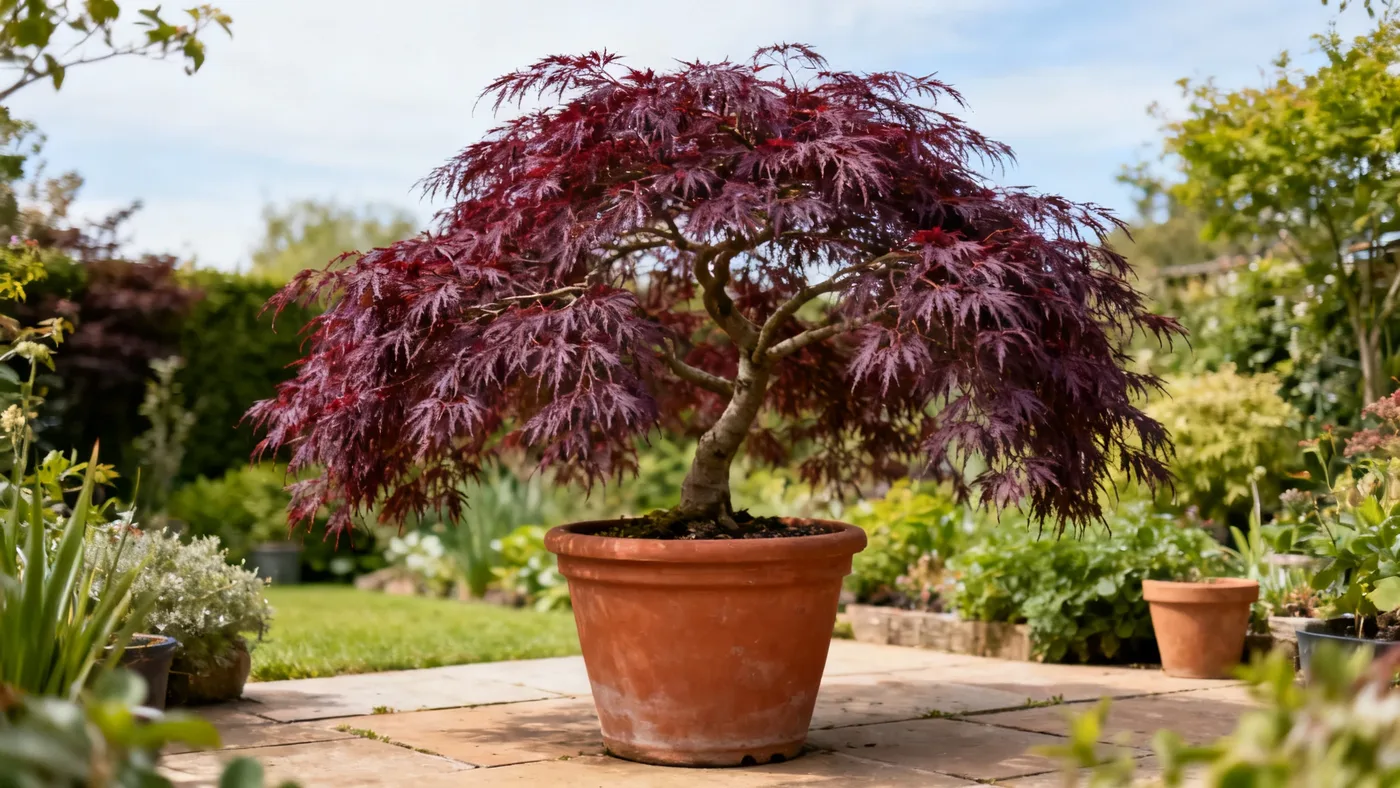
Buying a Tamukeyama Japanese Maple: Container Sizes to Know
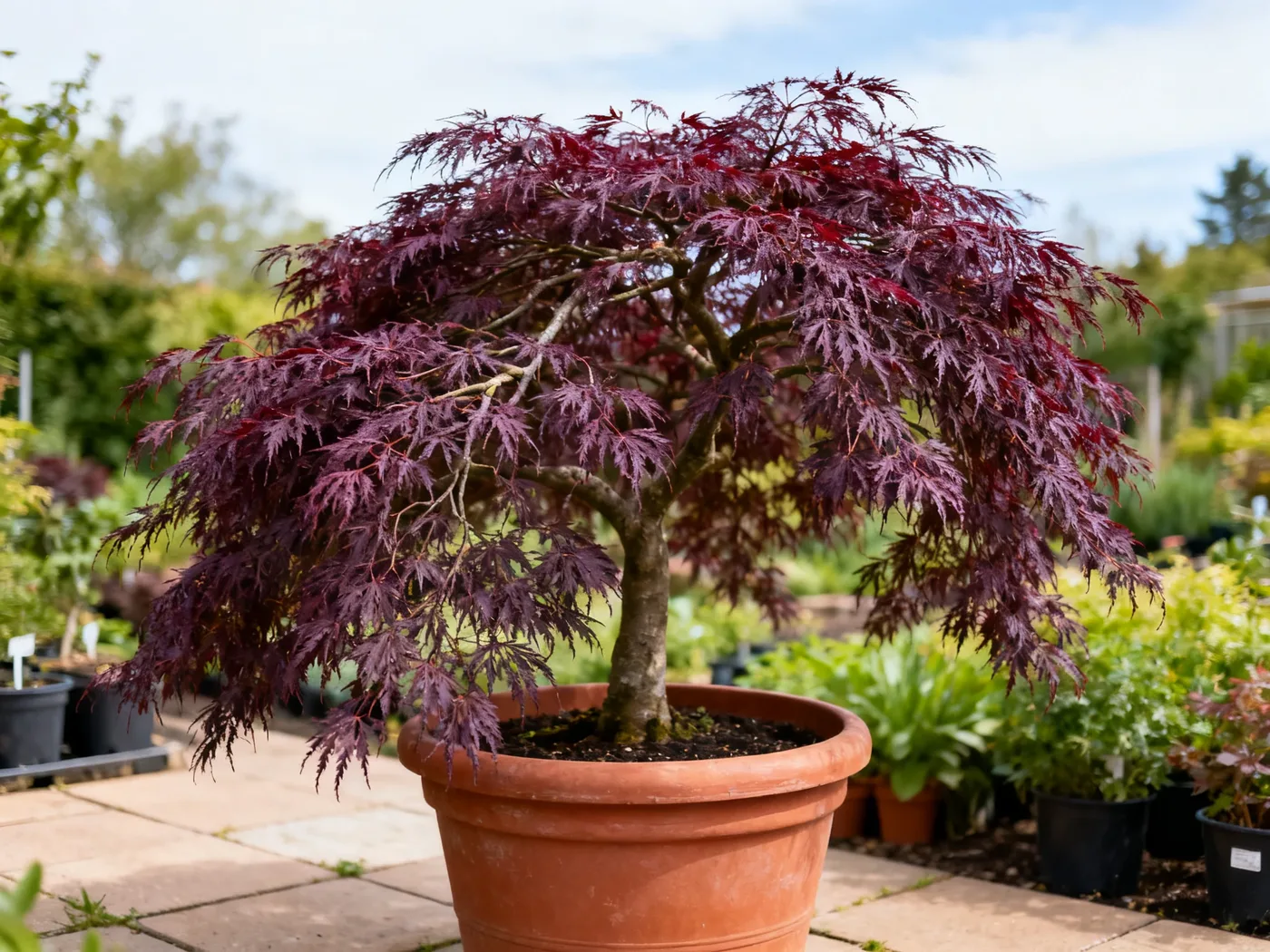
Buying a Tamukeyama Japanese Maple is an investment in a plant that will anchor your garden for decades. This weeping lace-leaf cultivar, prized for its deep red-purple foliage and graceful cascading form, typically appears in nursery catalogs and online retailers in a handful of standard container sizes. Knowing what each size offers, what quality looks like, and where gaps hide will save you from common disappointments that plague online plant purchases.
This guide walks you through what professional growers look for when selecting a Tamukeyama Japanese Maple, how to evaluate quality across different price tiers, and which container size matches your planting timeline and site conditions.
What to Look For: Quality Indicators That Matter
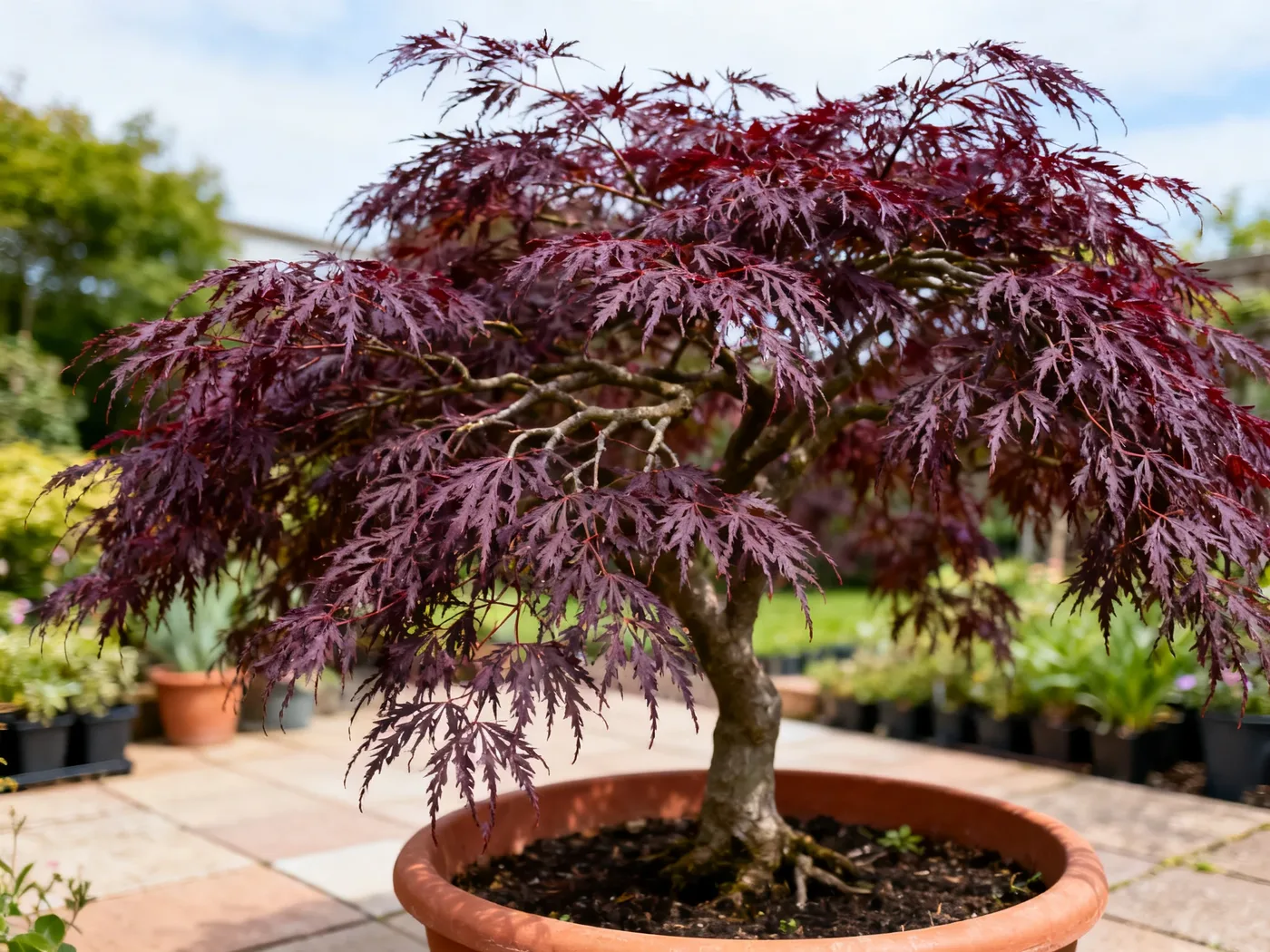
A quality Tamukeyama Japanese Maple shows several hallmarks that signal it has been well-grown and will establish quickly in your garden. Start with the foliage: leaves should be a deep red-purple color, without brown edges, yellow patches, or signs of drying. In late summer or early fall, some intensification of color is normal, but wilted or pale leaves indicate stress.
Inspect the main trunk and branch structure. The trunk should be free of sunburn (pale, papery bark or dark lesions), and branches should taper naturally from thick to thin without crossing over each other awkwardly. A well-shaped specimen shows a weeping habit, with lateral branches extending outward and downward, not bunched upright.
Check the soil surface. It should be moist but not waterlogged, and the container should feel heavy relative to its size. Bone-dry soil or water pooling on top both signal poor care. Gently lift the plant or ask if you can inspect the drainage holes: roots should be white or tan, not dark brown or slimy.
Finally, look for overall proportionality. A plant in a quart container should be modest in height and width. A plant in a #1 container (about 7 inches wide and 8 inches tall) should show a filled canopy but not be root-bound. There is no standard "perfect" size for every plant, but each specimen should fill its container without overcrowding or looking sparse.
Container Sizes Explained: From Quart to #3
Nursery-grown Tamukeyama Japanese Maples are typically sold in three standard sizes. Understanding what each means for your planting timeline and budget helps you choose the right starting point.
Quart Container
A quart container is roughly 3 inches by 3 inches by 4 inches deep. A young Tamukeyama in a quart pot may be 12 to 18 inches tall and 12 to 15 inches wide. This size represents the smallest production stage and offers the lowest entry cost. However, quart-grown plants are immature and require consistent watering in their first season, especially through hot weather. They benefit from afternoon shade and will need 2 to 3 years of careful establishment before they develop the full weeping form you expect from a mature Tamukeyama.
Quart containers are best for patient gardeners with time to nurture a young plant and for those planting in early spring when you can provide close oversight. They are also suitable if you plan to move the plant to a larger container before setting it in the ground.
#1 Container
A #1 container holds about 1 gallon and measures roughly 7 inches wide by 8 inches tall. A Tamukeyama in a #1 should be 2 to 3 feet tall and 2 to 4 feet wide, with a well-developed branch structure and mature-looking foliage. This is the sweet spot for most home gardeners. A #1 plant is established enough to handle the first growing season with moderate watering during dry spells, yet still young enough to respond well to transplanting. Root systems are developed but not yet confined, so establishment takes 1 to 2 years rather than 3 or more.
A #1 Tamukeyama is ideal if you want quicker visual impact, can provide afternoon shade in hot-summer regions, and are willing to water consistently through the first season. Most online retailers and regional nurseries stock this size because it strikes a balance between affordability and readiness.
#3 Container
A #3 container holds about 3 gallons and measures roughly 11 to 12 inches wide by 10 to 11 inches tall. A Tamukeyama in a #3 is typically 4 to 6 feet tall and 4 to 8 feet wide, with a fully formed weeping habit and dense foliage. These are mature nursery specimens that look impressive at planting time. Root systems are heavily developed; the plant is closer to its full cascading form.
A #3 plant requires minimal establishment time and can handle inconsistent watering better than smaller sizes. However, the larger root ball and weight make handling and planting more demanding. If you have heavy clay soil or poor drainage, a #3 may not establish faster than a #1 because root expansion in poor soil is slow regardless of starting size.
Choose a #3 if you want immediate visual effect, have excellent drainage and the physical capacity to handle the weight, or if you live in zone 8 and want a plant large enough to provide its own summer shade.
Key Features to Compare Across Suppliers
Once you narrow down your container size preference, compare these features to identify quality outliers.
Foliage Color and Texture
Tamukeyama holds its deep red-purple color through summer better than many other lace-leaf dissectum cultivars. When comparing plants, color should be consistent across the canopy, not pale or brownish at the edges. Leaves should feel supple and look finely dissected (deeply lobed and lacy). Wilted or crispy leaf margins indicate a plant that has been stressed by sun, wind, or drought.
Branch Framework
The architecture matters. Older plants (larger containers) should have a main trunk that tapers as it rises, with primary branches angling outward and secondary branches cascading downward. Avoid plants with a single upright leader or crowded, vertical branching. The weeping habit is what defines Tamukeyama; a tree that looks more shrubby or stiff has been poorly pruned or grown in shade.
Absence of Pest or Disease Damage
Inspect the underside of leaves, the branch crotches, and the trunk base for sign of scale insects, aphids, or spider mites. These pests are rare on well-maintained nursery stock but do occur. Dark spots or lesions on leaves or stems could indicate anthracnose or sunburn; ask the nursery which it is. Soft, rotted tissue at the base of the trunk signals root rot and is a deal-breaker.
Soil Moisture and Root Health
Ask if you can inspect roots or water the plant lightly before transport. Moist, firm soil is ideal. Saturated soil suggests poor drainage management; completely dry soil suggests the plant has been neglected. Roots visible at the drainage holes should be white or light tan. Dark, slimy roots indicate Phytophthora or other fungal issues and mean the plant will struggle to establish.
Top Picks by Price and Planting Timeline
Different container sizes suit different budgets and goals. Here is how to think about the trade-offs.
Budget-Conscious Buyers: Quart Container
A quart-grown Tamukeyama Japanese Maple from a reputable regional nursery is the most affordable entry point. You trade upfront cost for time and attention. Plan to provide consistent water through the first growing season, afternoon shade in hot climates, and 2 to 3 years before the plant reaches 4 to 5 feet tall. If you enjoy hands-on gardening and plant propagation interests you, a quart plant is rewarding. If you want a tree that looks established in one season, a quart will disappoint you.
Balanced Choice: #1 Container
A #1 Tamukeyama offers the best balance for most gardeners. You get a plant with visible form and established branching, mature foliage color, and a price point that does not require sacrificing other garden plans. Expect to water during dry spells in the first year and provide afternoon shade in zones 8 or hotter climates. The plant will grow 6 to 12 inches per year and fill out noticeably within 2 years. A well-grown #1 from a specialty grower typically costs less than half what a #3 commands.
Instant Impact: #3 Container
A #3 Tamukeyama is suited for gardeners who want immediate landscape presence, have the physical capacity to plant a 40 to 60-pound root ball, and can guarantee afternoon shade and consistent moisture the first season. The higher cost reflects the nursery's 3 to 4 years of production. A #3 specimen is closer to the tree's mature 6 to 10-foot height and 8 to 12-foot spread, so you are not waiting for decades to see the full effect.
Where to Buy: Retail Options and What to Expect
Tamukeyama Japanese Maples are available through multiple channels. Each has trade-offs in cost, selection, and post-sale support.
Regional Specialty Nurseries
A local nursery in your hardiness zone (zones 5 through 8) is your best first stop. Staff can advise on afternoon shade, local soil conditions, and pest pressures specific to your area. You can see the plant in person before buying, inspect roots and foliage, and ask about the plant's growing history. Specialty nurseries often stock #1 and #3 sizes. Plants may cost slightly more than online retailers, but you avoid shipping delays and damage.
Online Retailers and Mail-Order Nurseries
National mail-order nurseries and online retailers ship quart and #1 containers across the country. Shipping plants safely adds labor and packaging costs, and transit can stress young plants. Ask about shipping guarantees, arrival condition guarantees, and whether the company ships in spring only or year-round. Reputable retailers will replace or refund a plant that arrives damaged or diseased. #3 containers are rarely shipped due to weight and size; if available, shipping costs are substantial.
Big-Box Garden Centers
Large box stores sometimes carry Japanese Maples in spring, though Tamukeyama specifically is less common than other dissectum cultivars like Crimson Queen. Selection is seasonal and limited. Staff knowledge varies widely. If you purchase from a big-box center, inspect the plant very carefully for sun scald on the trunk, drought stress in the foliage, and pest damage. Crowded displays can hide problems.
Red Flags: What to Avoid
These warning signs mean you should pass on the plant or ask for a significant discount.
- Sunburned trunk: Pale, peeling, or dark lesions on the trunk indicate the plant was grown in harsh direct sun without shade cloth protection. Sunburned trees take years to recover and are prone to canker diseases.
- Brown leaf margins or scorched foliage: Crispy leaves from heat, wind, or drought stress signal a plant that has been neglected or grown in too much sun. Recovery is slow.
- Soggy soil or standing water: Waterlogged containers lead to root rot. If the soil drains poorly, the problem will not resolve once planted unless you amend heavily.
- Dense moss or algae on soil surface: Indicates the container has sat in shade for weeks without watering or drying. The plant may be recovering from underwatering stress.
- Sticky residue, cottony clusters, or tiny moving dots on leaves: These are scale insects, mealybugs, or spider mites. Treatment is possible, but infested plants stress more easily after transplanting.
- Soft, mushy tissue at the base of the trunk: This is root rot and means the plant will likely decline in your garden. Avoid it.
- Upright, stiff branching on a tree labeled Tamukeyama: The tree may be mislabeled or was grown in a crowded greenhouse. Tamukeyama should show a weeping form even as a young plant.
- Extremely cheap pricing with no explanation: A #1 Tamukeyama priced far below market rate may be salvage stock, a mislabeling, or a plant on final clearance due to poor condition.
Planting Prep: What You Need Before You Buy
Before you bring home a Tamukeyama, confirm that your site meets the plant's needs. Read our complete Tamukeyama Japanese Maple care guide to understand hardiness zones, watering, soil composition, and afternoon shade requirements in your region.
In particular, verify that your soil is rich, well-drained loam with a slightly acidic to neutral pH around 5.5 to 6.5. Heavy clay that holds water year-round will lead to root rot regardless of container size or price. If your soil is clay, you will need to amend heavily or use a raised bed or large landscape container.
Identify where you can provide afternoon shade, especially if you live in zone 8 or in a region with hot, dry summers. Afternoon shade prevents the intense heat that causes leaf scorch and sunburn on the trunk.
Quick Reference: Container Sizes at a Glance
| Container Size | Approximate Plant Height/Width | Typical Age | Best For | First-Year Watering Needs | Est. Years to Mature Form |
|---|---|---|---|---|---|
| Quart | 12–18 in. tall, 12–15 in. wide | 1–2 years old | Patient gardeners, budget buyers, spring planting | Frequent, consistent moisture | 3+ |
| #1 Container | 2–3 ft. tall, 2–4 ft. wide | 2–3 years old | Most home gardeners, balanced choice | Moderate, during dry spells | 1–2 |
| #3 Container | 4–6 ft. tall, 4–8 ft. wide | 3–4 years old | Immediate visual impact, established gardens | Moderate, well-drained site | 0–1 |
Quality Checklist Before You Commit
- Foliage is deep red-purple with no brown edges or yellow patches
- Trunk is free of sunburn (pale or dark lesions)
- Branches show a weeping form, not stiff or upright
- Soil is moist but not waterlogged
- Roots visible at drainage holes are white or light tan
- No visible pests, scale, mealybugs, or spider mites
- Plant is proportionate to its container, not cramped or sparse
- No soft, mushy tissue at the trunk base
- Retailer offers a guarantee or refund policy for damaged arrival
- You have a planting site with afternoon shade and well-drained soil ready