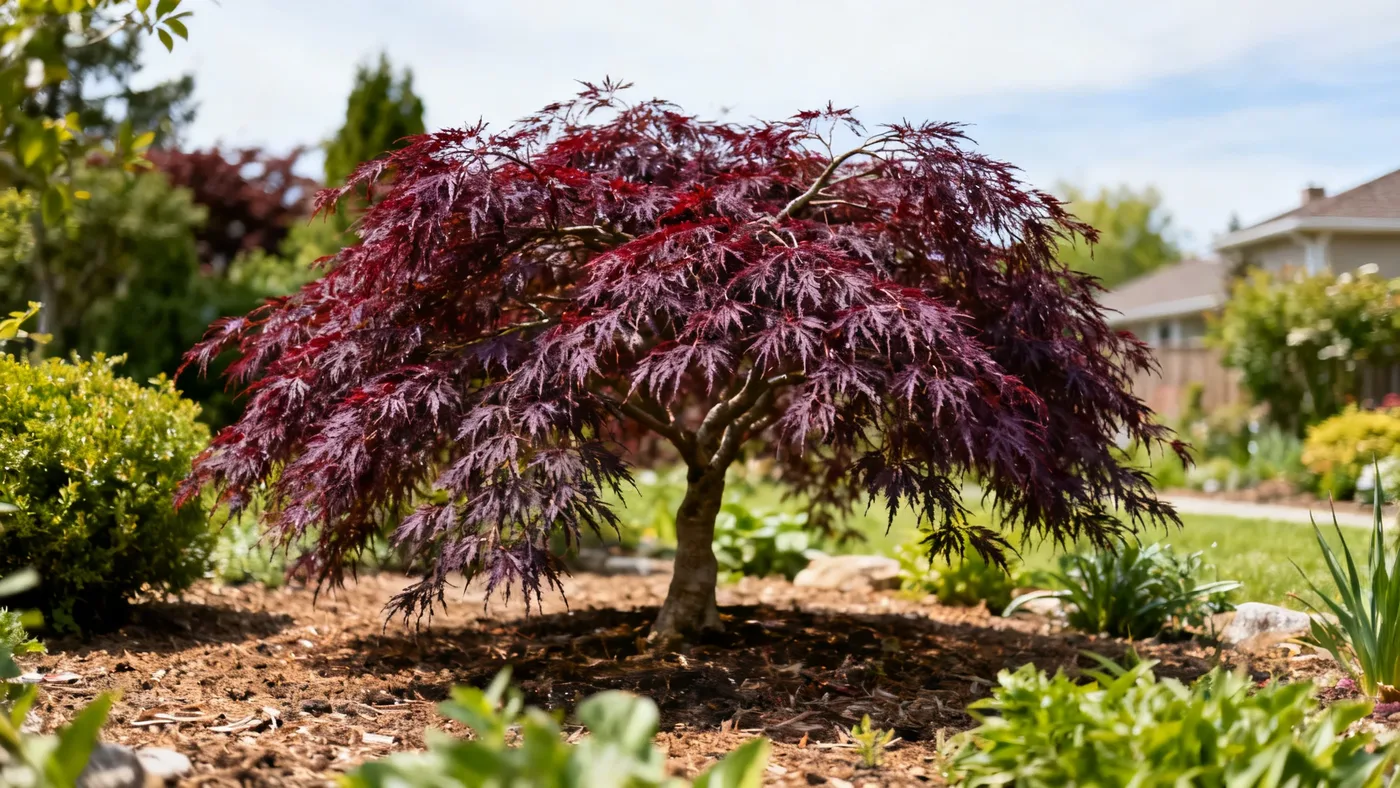
Tamukeyama Japanese Maple FAQ: Answers to Common Questions
Whether you're considering planting a Tamukeyama Japanese Maple or already have one in your garden, you likely have questions about its care, hardiness, and growth habits. This FAQ covers the most common questions home gardeners ask about this elegant weeping cultivar. For detailed guidance on ongoing care, see our complete growing guide. For step-by-step instructions, check our dedicated planting article.
Basics and Overview
What exactly is a Tamukeyama Japanese Maple?
Tamukeyama is a cultivar of Acer palmatum var. dissectum, a deciduous shrub or small tree with a distinctive weeping, cascading form. It's a Japanese cultivar that dates to the 1700s and is prized for its deeply dissected, lacy foliage and graceful branching habit. The name reflects its heritage and is sometimes written as Tamuke Yama or Red Lace-Leaf Japanese Maple in nursery catalogs.
How big does a Tamukeyama Japanese Maple grow?
A mature Tamukeyama typically reaches 6 to 10 feet tall, though specimens can reach 8 to 12 feet after several decades of growth. The width is typically 8 to 12 feet, making the plant wider than it is tall because of its characteristic cascading branching habit. This makes it an excellent focal point for moderate-sized gardens.
How fast does a Tamukeyama Japanese Maple grow?
Tamukeyama grows slowly, adding roughly 6 to 12 inches per year once established. This slow growth rate means patience is required, but it also makes the plant easier to maintain in a specific space and less likely to outgrow its location. Most specimens take 10 to 15 or more years to approach their full mature size.
What makes Tamukeyama different from other Japanese maples?
Tamukeyama holds its deep red-purple foliage color through the summer better than many other dissectum (weeping) cultivars, which can fade or green in intense heat. Its fine, lacy leaf texture and graceful weeping form also make it distinctive among the dozens of Japanese maple varieties available to gardeners.
How long do Tamukeyama Japanese Maples live?
With proper care, a Tamukeyama Japanese Maple is long-lived, commonly surviving 50 to 100 or more years. This longevity makes it a worthwhile investment for your landscape and a plant that can be enjoyed across generations.
Planting and Site Selection
When should I plant my Tamukeyama Japanese Maple?
The best planting times are early spring or fall, as long as you avoid extreme summer heat or winter freeze at the time of planting. Spring planting allows the tree to establish roots before summer stress, while fall planting lets it settle in before winter dormancy. Avoid planting during heat waves or severe cold snaps.
Where should I plant a Tamukeyama in my garden?
Tamukeyama works best as a specimen or focal point where its graceful weeping form can be appreciated, such as near an entryway, on a patio, or beside a water feature. It's also excellent in rock gardens, Japanese-style gardens, and zen gardens. Pair it with shade-tolerant companions like azaleas, hostas, ferns, or dwarf conifers for a cohesive planting scheme.
How much sun does a Tamukeyama Japanese Maple need?
Tamukeyama tolerates full sun to partial shade, though it benefits from afternoon shade in hot-summer climates to prevent leaf scorch. In cooler regions (zones 5 to 7), it can handle more direct sun throughout the day. In zone 8 or warmer, afternoon shade protection is strongly recommended.
How far apart should I space multiple Tamukeyama maples?
Space multiple Tamukeyama specimens 8 to 10 feet apart if planting them in groupings. If using a single Tamukeyama as a lawn or patio specimen, allow even more space (at least 10 feet) to showcase its full mature width of 8 to 12 feet.
Hardiness and Climate
What USDA zones is Tamukeyama hardy in?
Tamukeyama Japanese Maple is hardy in USDA zones 5 through 8. Some nurseries list it as hardy to zone 9, though performance in zone 9 depends heavily on summer heat and afternoon shade availability. Check with your local extension service if you're in zone 8 or warmer to assess risk in your specific microclimate.
Can I grow Tamukeyama in a hot climate?
Tamukeyama can be grown in hotter regions with the right conditions: afternoon shade is essential to prevent leaf scorch, consistent soil moisture is critical, and a location with some wind protection helps. Hot, dry conditions stress the plant significantly, so extra attention to watering and site selection is necessary if you're outside its ideal hardiness range.
Is Tamukeyama hardy enough for zone 9?
While some sources list Tamukeyama for zone 9, success depends on your specific location and siting. Zone 9 summers can be harsh; even with afternoon shade, the plant may struggle without consistent moisture and protection from intense afternoon sun. Consult your local cooperative extension to evaluate whether conditions in your area are suitable.
Watering and Soil
How much water does Tamukeyama need?
Tamukeyama requires moderate, regular watering with consistent moisture in well-drained soil. Young plants need particularly consistent water to establish strong root systems. Once established, the plant has low to moderate drought tolerance, but extended dry periods can stress it, especially in hot climates or container settings.
What type of soil is best for Tamukeyama?
Rich, well-drained loam is ideal for Tamukeyama Japanese Maple. The soil should be slightly acidic to neutral, with a pH between 5.5 and 6.5. Good drainage is non-negotiable, as waterlogged soil can lead to root rot and other problems.
Can Tamukeyama tolerate different soil types?
Tamukeyama tolerates some clay in the soil as long as drainage is adequate. However, it does not tolerate salt or highly alkaline soils well. If your soil is alkaline, amending it with sulfur or peat moss to lower the pH may help, though you should test the soil first to confirm the pH is the issue.
How do I improve drainage in heavy soil?
If your garden has heavy clay or compacted soil, amend the planting hole with aged compost, peat moss, or other organic material mixed into the native soil. This improves both drainage and soil structure. Mulching after planting also helps retain moisture without causing waterlogging.
Foliage and Color
What color are the leaves in summer?
Tamukeyama's leaves are deep red-purple during the growing season, and this color is one of the cultivar's standout features. Unlike many other dissectum maples, Tamukeyama maintains its red-purple color through summer better than most, though intense heat can cause it to green slightly.
What color are the leaves in fall?
In autumn, Tamukeyama's foliage turns crimson to scarlet red before dropping. This vibrant fall display is brief but stunning and adds another season of interest to your garden.
Why do the leaves turn brown or scorch?
Leaf scorch typically results from hot sun, strong wind, or drought stress, not from disease. It can also occur if the tree is planted in full sun in a hot climate without afternoon shade protection. Ensure consistent soil moisture, provide afternoon shade in hot regions, and consider a windbreak if your site is exposed.
Does Tamukeyama hold its red color all summer?
Tamukeyama holds its red-purple color better than most dissectum cultivars throughout the summer. In very hot or extremely sunny conditions, the foliage may lighten or develop a greenish tint, but the overall effect remains distinctly red. This superior color retention is a key reason gardeners choose this cultivar over others.
Pruning and Maintenance
Does Tamukeyama need pruning?
Minimal pruning is needed for Tamukeyama Japanese Maple. The tree naturally develops an attractive weeping form without much intervention. Pruning is best reserved for removing dead, diseased, crossing, or downward-growing branches that interfere with the plant's graceful silhouette.
When should I prune a Tamukeyama?
Prune Tamukeyama in late fall through winter dormancy, when the tree is leafless and the branch structure is clearly visible. Avoid heavy pruning, which stresses the plant and can lead to poor regrowth. If you must remove a branch during the growing season, do so only if it's dead or damaged.
How often should I fertilize Tamukeyama?
A single light feeding in early spring with a balanced, slow-release fertilizer formulated for woody ornamentals or acid-loving plants is usually sufficient. Avoid excess nitrogen, which encourages weak, leggy growth. If the tree is growing well and foliage color is good, additional fertilizing is often unnecessary.
Problems, Pests, and Diseases
What pests affect Tamukeyama Japanese Maple?
Common pests include aphids, scale insects, borers, Japanese beetles, and spider mites. Most infestations are minor and do not require treatment if the tree is otherwise healthy. Monitor the tree regularly, and if pests become severe, consult your local extension for management options.
What diseases should I watch for?
Potential diseases include verticillium wilt, root rot (Phytophthora) in poorly drained soil, and anthracnose. Prevent these problems by ensuring good drainage, avoiding waterlogged soil, and removing debris around the base of the tree. Leaf scorch may appear disease-like but is actually environmental stress, not a pathogenic disease.
Why are my leaves yellowing?
Yellowing (chlorosis) often results from alkaline soil preventing the tree from absorbing iron. If your soil pH is above 6.5, consider a soil amendment to acidify it, or consult your extension office for guidance. Yellowing can also indicate overwatering or poor drainage in heavy soils.
Is Tamukeyama toxic to pets?
No, Tamukeyama Japanese Maple is not known to be toxic to pets or people. According to the ASPCA, Japanese maple (Acer palmatum) is listed as non-toxic. This makes it a safe choice for households with cats, dogs, or children.
Is Tamukeyama invasive?
Tamukeyama is not classified as invasive. While Acer palmatum can self-seed in some regions, it does not spread aggressively like some other maple species, and the seedlings are easily managed if they appear.
Container Growing
Can I grow Tamukeyama in a container?
Yes, Tamukeyama is well suited to large containers and is popular for patio and bonsai-style growing. Use a large container with excellent drainage and quality potting soil. In colder zones (5 to 7), provide winter protection for the roots by moving the container to a sheltered location or wrapping it with burlap during severe cold. Water container specimens more frequently than in-ground plants, as pots dry out faster.
What size container should I use?
Start with at least a 5-gallon or larger #3-sized container. As the tree grows, you may eventually move it to a 10 to 15-gallon or larger container to accommodate root development. Nursery-grown Tamukeyama plants are often sold in quart, #1, or #3 containers, so you can plan for size accordingly.
Do I need to repot my container Tamukeyama?
Check the roots annually in spring. If roots are circling the soil surface or coming out the drainage holes, repot the tree into a container one size larger. Otherwise, root-bound container maples can be maintained by pruning roots lightly during dormancy.
Deer and Wildlife
Is Tamukeyama deer resistant?
Tamukeyama is generally considered moderately deer resistant, though it's not deer-proof. Young plants with tender leaves are more likely to be browsed than mature specimens. In areas with high deer populations, consider fencing or deer repellent if browsing becomes a problem.
Does Tamukeyama attract pollinators or wildlife?
Tamukeyama produces small, inconspicuous reddish-purple flowers in spring (April to May) that provide minor nectar for bees during the brief bloom period. It is not considered a significant wildlife plant like native species, but the flowers and graceful form do add some ornamental and ecological value to the garden.
Quick Reference Checklist
| Category | Details |
|---|---|
| Mature Size | 6 to 10 ft tall, 8 to 12 ft wide |
| Growth Rate | Slow, 6 to 12 inches per year |
| Hardiness | USDA zones 5 to 8 |
| Sun Requirement | Full sun to partial shade; afternoon shade in hot climates |
| Soil | Rich, well-drained loam; pH 5.5 to 6.5 |
| Water Needs | Moderate, consistent moisture; low to moderate drought tolerance once established |
| Planting Season | Early spring or fall |
| Spacing | 8 to 10 ft between plants |
| Pruning | Minimal; late fall through winter dormancy only |
| Fertilizing | Light feeding in early spring with balanced slow-release formula |
| Years to Maturity | 10 to 15+ years to full size |
| Lifespan | 50 to 100+ years |
| Summer Foliage | Deep red-purple, holds color well |
| Fall Foliage | Crimson to scarlet red |
| Container Suitable | Yes, needs large pot (5 gal. minimum) and winter protection in cold zones |
| Toxicity | Non-toxic to pets and people |
| Deer Resistant | Moderately resistant, not deer-proof |