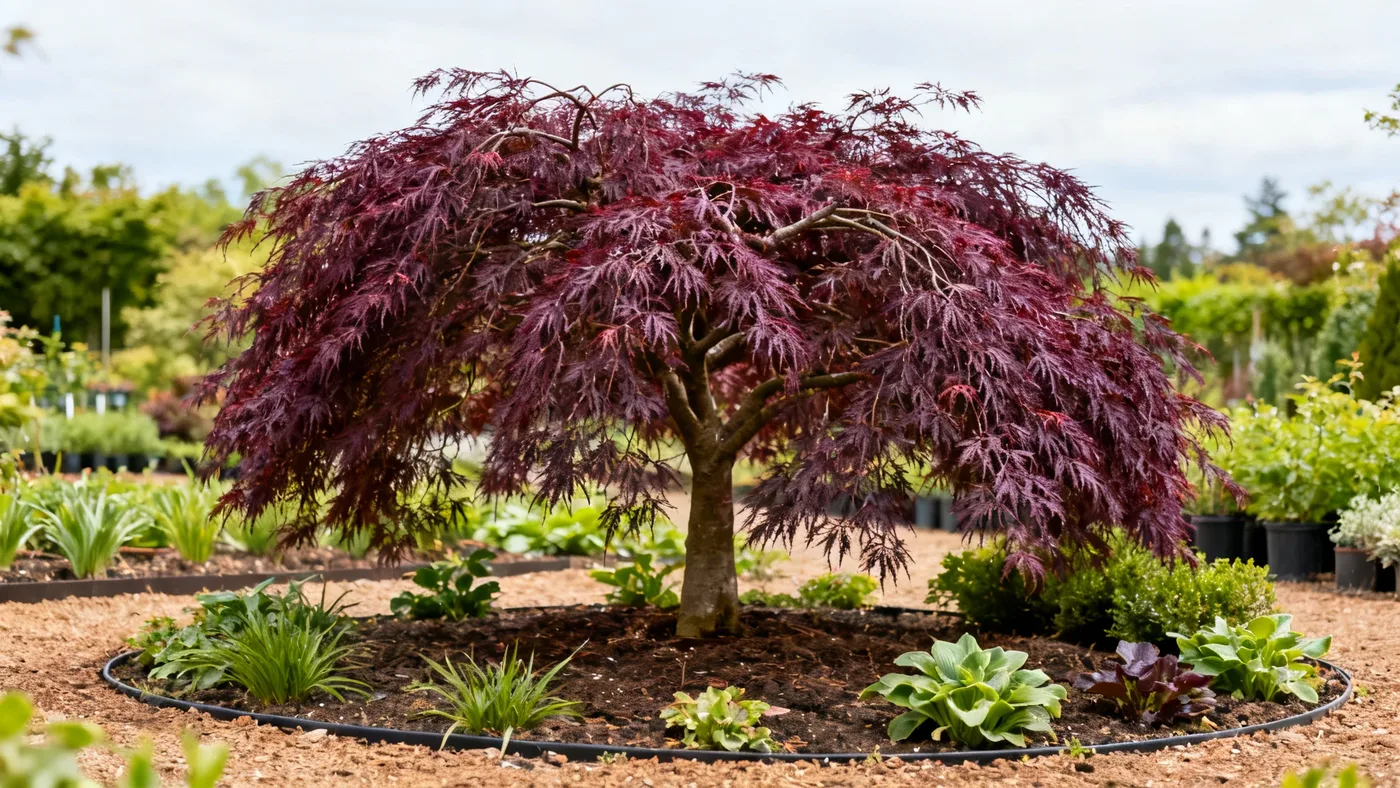
Landscape Ideas for Tamukeyama Japanese Maple in Your Yard
The Tamukeyama Japanese Maple, a weeping form of Acer palmatum var. dissectum with finely dissected, lacy foliage, offers one of the most elegant additions to any residential landscape. In USDA zones 5-8, this slow-growing cultivar matures to 6-10 feet tall and 8-12 feet wide, making it suitable for yards that can accommodate its cascading silhouette. Its deep red-purple summer color and crimson-to-scarlet fall display make it a year-round visual anchor. Below are seven proven tamukeyama maple garden design ideas to help you integrate this striking plant into your yard.
1. Specimen Planting as a Lawn Focal Point
A solo Tamukeyama on open lawn is perhaps the most impactful use for this cultivar. The weeping, mounding form naturally draws the eye and creates visual interest without competition. Plant it where it receives full sun to partial shade, positioning it at least 8 feet from structures and other shrubs so its cascading branches have room to develop their characteristic spreading habit.
The lawn around the tree remains green and uncluttered, allowing the architectural shape and color changes through the seasons to command attention. Spring brings inconspicuous reddish-purple flowers, summer holds that rich red-purple foliage, and fall delivers crimson-to-scarlet color that rivals any ornamental. Winter reveals the graceful branch structure and bark texture after leaf drop.
Keep mulch a few inches away from the trunk to prevent rot, and water consistently during the growing season. No companions are needed here; the Tamukeyama's weeping silhouette is complete on its own.
Practical takeaway: Allocate a clear 10-12 foot diameter circle of lawn or ground plane to let the plant's full cascading form develop without crowding.
2. Create a Japanese Garden Sanctuary
Japanese and zen gardens are the natural home for Tamukeyama Japanese Maple. The cultivar's origins as one of the oldest known dissectum selections dating to the 1700s make it authentic to traditional Japanese garden design. Combine it with complementary shade-loving plants like hostas, ferns, dwarf conifers, and hakonechloa (Japanese forest grass) to build a cohesive, serene space.
Integrate hardscape elements: stepping stones, gravel areas, or a small koi pond nearby. The afternoon shade benefits this plant in hot-summer climates, so position the Tamukeyama where taller evergreens filter midday sun. Layer low-growing heuchera or azaleas at its base to soften transitions. Maintain symmetry and restraint; fewer plants, carefully selected, create the contemplative effect that defines Japanese garden aesthetics.
A Japanese garden design draws visitors into a slower pace. The Tamukeyama becomes the focal anchor while understory plants create visual depth without clutter. Spacing these companions at least 3-4 feet apart allows each plant to develop its full form and prevents overcrowding in the limited light beneath the maple.
Practical takeaway: Pair your Tamukeyama with 3-4 companion shade plants (hostas, ferns, dwarf conifers) spaced 3-4 feet apart to build a balanced Japanese garden composition.
3. Container Growing for Patios and Entries
Tamukeyama Japanese Maple is well-suited to large container planting, making it an excellent choice for patios, decks, and entryways where ground space is limited. Nursery-grown specimens are usually sold in #3 containers (approximately 15-30 gallons), which can serve as your starting point. The weeping form looks particularly striking in raised planters or positioned on a pedestal so the cascading branches can hang freely.
Containers dry faster than in-ground soil, so water more frequently during the growing season and ensure excellent drainage to prevent root rot. Use a rich, well-drained potting mix and feed with a balanced, slow-release fertilizer formulated for woody ornamentals in early spring. In zones 5-7, bring the container to a sheltered location or provide winter mulch around the pot to insulate the roots; zone 8 plants need afternoon shade and consistent moisture in hot summers.
Patio containers create flexible focal points. You can rotate plantings seasonally or move the tree to a more protected microclimate during extreme heat or cold. Position it near an entryway or patio seating area where its color changes catch the light at different times of day.
Practical takeaway: Use a #3 or larger container with drainage holes, fill with rich, well-drained potting mix, and water more frequently than in-ground specimens. Provide winter protection for roots in zones 5-7.
4. Rock Garden Integration
Tamukeyama Japanese Maple fits naturally into rock gardens where well-drained soil and careful plant selection define the design. The cultivar's slow growth (roughly 6-12 inches per year) means it won't outcompete smaller companion plants, and its architectural form contrasts beautifully with low-growing sedums, creeping phlox, and alpine spreaders.
Rock gardens benefit from rich, well-drained loam with a slightly acidic to neutral soil pH of roughly 5.5-6.5. Tamukeyama tolerates some clay if drainage is adequate, so amend your planting hole accordingly. Position rocks and boulders to frame the Tamukeyama's weeping silhouette, using larger stones as visual anchors and smaller stones to guide sight lines.
The minimal maintenance ethos of rock gardens aligns well with Tamukeyama's needs. Once established, it requires only light pruning to remove dead or crossing branches in late fall through winter dormancy. Avoid heavy pruning, which stresses the tree. Pair the maple with drought-tolerant companions like dwarf conifers and heuchera to reduce overall water demands.
Practical takeaway: Build your rock garden around Tamukeyama's soil preferences (rich, well-drained, pH 5.5-6.5) and pair it with slow-growing alpine plants that won't overshadow the maple's architectural form.
5. Layered Shade Garden with Companion Plants
A shaded understory beneath larger trees or on the north side of structures offers an ideal setting for Tamukeyama Japanese Maple and a rich palette of shade-tolerant companions. The plant benefits from afternoon shade in hot-summer climates (zones 8 and transition areas), which prevents leaf scorch and keeps foliage color vibrant through summer.
Build a three-tiered planting scheme: the Tamukeyama as the upper canopy element, mid-level shrubs like azaleas or dwarf conifers, and ground-covering ferns or hostas creating a soft base. Space the Tamukeyama 8-10 feet from other specimens if using multiple trees, and position shade companions 2-3 feet away from the maple's drip line. This layered approach mimics woodland ecology and provides visual interest at every level.
Shade gardens typically hold moisture longer than sunny areas, reducing watering frequency once plants are established. However, ensure soil drains well to prevent root rot and Phytophthora issues. A thick layer of organic mulch (2-3 inches) helps regulate soil temperature and retain moisture without suffocating the roots.
Practical takeaway: Create a three-tiered shade garden with Tamukeyama as the canopy layer, mid-level shrubs like azaleas, and ground covers of ferns or hostas. Space companions 3-4 feet apart.
6. Waterside and Pond Feature Planting
Tamukeyama Japanese Maple is commonly sited near ponds, water features, and streamside plantings, where its cascading form reflects beautifully in still water. The weeping silhouette and delicate foliage create a serene, contemplative atmosphere when mirrored on a water surface.
Position the Tamukeyama 3-4 feet back from the water's edge rather than directly at the shoreline. This provides enough soil depth for a healthy root system while allowing lateral branch development. The proximity to water usually means consistent soil moisture, which suits the plant's preference for moderate, regular watering. Avoid planting in areas where water stagnates or flooding occurs; the maple's low-to-moderate drought tolerance once established should not be tested by waterlogging.
Combine waterside Tamukeyamas with other shade-loving, moisture-tolerant companions like hostas, ferns, and hakonechloa. The lacy foliage of the maple pairs well with the bold, broad leaves of hostas and the fine, feathery texture of Japanese forest grass. This combination creates a dynamic visual rhythm that draws attention from the water up through the layers of plantings.
Practical takeaway: Site Tamukeyama 3-4 feet back from water features to allow root development while ensuring consistent soil moisture. Combine with hostas and ferns for a cohesive waterside planting.
7. Weeping Backdrop for Spring Bulbs
Use the Tamukeyama's open, weeping branch structure as a natural canopy for spring bulbs planted beneath. Daffodils, tulips, and crocuses emerge through the leaf litter in spring before the maple's foliage fully expands. Once the maple leafs out, the bulbs have already completed their cycle, and the tree's cascading form creates a graceful backdrop for the season's flush of color.
The sparse canopy beneath a Tamukeyama allows light to reach emerging bulbs in early spring, then provides afternoon shade as temperatures warm. This is an efficient use of space and creates a seasonal color progression. In fall, as the maple's foliage turns crimson to scarlet, the dying bulb foliage can be cut back without visually jarring the garden, since the tree's color will dominate attention.
Plant bulbs 4-6 inches deep in groups of 10-15 for impact. Daffodils are preferred over tulips in this setting because their leaves persist slightly longer and they're more likely to naturalize and return year after year. Space bulbs 3-4 inches apart in drifts radiating outward from the maple's base.
Practical takeaway: Plant spring bulbs (daffodils especially) beneath the Tamukeyama in drifts of 10-15, spaced 3-4 inches apart, for a reliable seasonal color transition.
Quick Reference: Tamukeyama Japanese Maple Landscaping Checklist
| Design Idea | Best Zones | Spacing | Key Companions | Sun/Shade | Key Point |
|---|---|---|---|---|---|
| Specimen lawn planting | 5-8 | 10-12 ft diameter | None required | Full to partial | Let the silhouette stand alone |
| Japanese garden | 5-8 | 8-10 ft apart | Hostas, ferns, dwarf conifers, hakonechloa | Partial shade | 3-4 companions, 3-4 ft spacing |
| Container/patio | 5-8 | #3 container minimum | None required | Full to partial | Larger pot, more frequent watering |
| Rock garden | 5-8 | 8-10 ft apart | Dwarf conifers, sedums, heuchera | Full to partial | Well-drained soil (pH 5.5-6.5) |
| Shade garden layers | 5-8 | 8-10 ft apart | Azaleas, hostas, ferns | Partial to shade | Three tiers, 2-3 ft base spacing |
| Waterside planting | 5-8 | 3-4 ft back from edge | Hostas, ferns, hakonechloa | Partial shade | Consistent moisture without flooding |
| Bulb backdrop | 5-8 | Bulbs 3-4 in. apart | Spring bulbs (daffodils) | Full to partial | 10-15 bulb drifts beneath canopy |
For more information on caring for your Tamukeyama Japanese Maple year-round, see our complete growing guide.